2026-01-22
With the development of digital printing technology, CTP (Computer-to-Plate) technology has become an indispensable part of the modern printing industry. CTP developers, as a crucial component of this technology, play a vital role in the quality of printing results, production efficiency, and cost control.
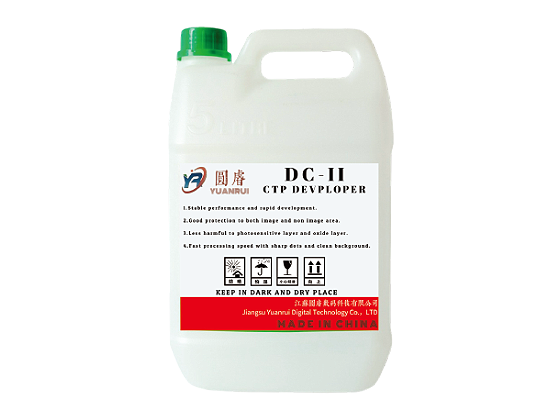
CTP developers are key chemical substances used in the digital printing process to reveal the image information on the printing plate. They primarily work through chemical reactions to develop the photosensitive layer coated on the printing plate, forming image areas that can accept ink during the printing process. The role of CTP developers is to ensure the quality of the printing plate and to ensure that the image information is accurately transferred to paper or other media. Therefore, it directly affects not only the quality of the printed product but also production efficiency and printing costs.
Compared with traditional printing developers, CTP developers offer higher precision and less chemical pollution. They can clearly reveal image information without the need for chemical solutions and complex operations, greatly improving work efficiency and product quality.
The working principle of CTP developers is based on the photochemical reaction of photosensitive materials. After the CTP plate is exposed to laser light, the photosensitive coating in the exposed areas undergoes a chemical change, forming the image information. Then, the developer selectively removes the unexposed coating by contacting the exposed photosensitive layer, revealing the image area. During the development process, the chemical components dissolve the unexposed coating, exposing the image area that can accept ink. This process is usually completed in a developing tank, and the combination of the developer with water and other chemicals determines the development effect.
The accuracy of the development process directly relates to the clarity of the printing plate and the printing quality. If the developer's effect is not ideal, it may lead to unclear images or damage to the printing plate, thus affecting the quality of the printed product. Therefore, choosing the right CTP developer is crucial to ensuring optimal printing results.
Based on different application needs, common CTP developers on the market can be divided into the following categories:
Alkaline CTP developers are generally used for processing negative-working plates. After exposure, the unexposed areas of these plates are dissolved and removed during the development process. Alkaline developers usually have strong cleaning capabilities, effectively removing unexposed areas and ensuring the clarity of the image area.
Acidic CTP developers are suitable for positive-working plates. After exposure, the exposed areas of positive-working plates become harder and less soluble, while the unexposed areas are easily removed by the developer. Acidic developers are generally milder and protect the printing plate from damage.
With increasing environmental requirements, waterless CTP developers are gradually becoming a trend. These developers do not require water; the development process uses only chemical solvents, reducing the environmental pollution caused by traditional water-based developers. Waterless developers offer better adaptability and lower maintenance costs.
When choosing a suitable CTP developer, in addition to considering the product type and application, several factors need to be considered comprehensively, including chemical properties, cost, and environmental friendliness.
The chemical stability of CTP developers is crucial for printing quality. The stability of the developer directly affects the uniformity and repeatability of the development effect. If the developer is prone to chemical reactions or is unstable, it may lead to fluctuations in the development effect, affecting the clarity of the image information. Therefore, choosing a highly stable developer can ensure the smooth operation of the production line and reduce failures and losses.
Different types of CTP developers vary in development speed and effect. Some developers can quickly develop images, saving production time, while others require longer development times but perform better in terms of plate quality and precision. When choosing, companies need to balance development speed and effect based on their actual production needs.
With increasingly stringent environmental regulations, the environmental friendliness and safety of CTP developers are gradually becoming important factors in the selection process. Traditional CTP developers may contain harmful chemicals, posing potential risks to operators and causing environmental pollution. Therefore, choosing low-toxicity, environmentally friendly developers can effectively reduce operational risks for businesses and meet the needs of sustainable development.
The cost of CTP developers is a crucial factor that every company must consider when making a selection. While high-quality developers may be more expensive, their superior development performance, longer lifespan, and ease of use may offer better cost-effectiveness in the long run. Companies should choose products with high cost-effectiveness based on their production scale and budget.
Correct use and maintenance of CTP developers are key to ensuring printing quality and production efficiency. Operators must strictly follow the instructions for use, according to the type and specifications of the developer. Different developers have different requirements for concentration, temperature, and time; any slight error can affect the development results.
Regular replacement and cleaning of the developer are equally important. As the usage time increases, the chemical components of the developer gradually lose their effectiveness and need to be replaced regularly to ensure optimal development results. At the same time, the developing tank and related equipment also need regular cleaning to prevent contamination or deposits from affecting the development quality.
When choosing a CTP developer, companies should consider factors such as the type of product (e.g., acidic or alkaline), development speed, chemical stability, environmental friendliness, and cost to select the product that best suits their production needs.
Different printing plates require different types of developers. For example, negative plates are suitable for alkaline developers, while positive plates require acidic developers. Therefore, the choice should be based on the specific type of printing plate.
Traditional CTP developers may contain harmful chemicals, requiring special attention to safety and environmental issues during use. Environmentally friendly developers are now available on the market, which can reduce environmental pollution.
RELATED PRODUCTS
CONTACT US
KEEP IN TOUCH

Mobile QR code
Contact Information
No.77,Taisheng Road,Hailing District,Taizhou City,Jiangsu
+86 13961040488+86 19852223565
+86 523 86969522
Copyright © by Jiangsu Lecai Printing Materials Co., Ltd. Rights Reserved.Custom Digital Offset Printing Plates Manufacturers

 English
 Français
 Español
 Indonesia
 عربى
عربى