2026-09-30
Thermal CTP plates sit at the centre of modern offset platemaking. Instead of exposing film and burning a plate by hand, the job is written directly onto a coated aluminium plate inside a computer-to-plate setter, developed, and mounted on press within minutes. The plate itself decides how faithful that process turns out to be: how small a dot it can hold, how cleanly it separates ink from water, and how many impressions it survives before the image begins to wear.
We are Jiangsu Yuanrui Digital Technology Co., Ltd., part of the same plate-manufacturing group as Jiangsu Lecai Printing Material Co., Ltd. Our teams have spent more than fifteen years producing offset plates, and thermal CTP plates are the centre of what we make. This guide gathers what we have learned about how thermal plates behave in real pressrooms, how single-layer and double-layer plates differ, and how to pick the right one for the work on your floor.
A thermal CTP plate carries a coating that absorbs near-infrared energy. When the plate is loaded into a thermal setter, a laser diode array writes the job at roughly 830 nm. Where the laser strikes, the coating is altered so the developer can wash it away, exposing the hydrophilic, grained aluminium underneath. The unexposed coating stays in place and carries ink. There is no film, no vacuum frame and no darkroom discipline to manage, which is why thermal imaging became the default route for commercial litho work.
The properties we tune during coating are easy to list and hard to balance. Fast photosensitivity lets setters run at production speed without under-exposure. High resolution and large-format capacity support demanding half-tone work and bigger sheet sizes. Good ink and water balance keeps the press stable through the run. High run length means the plate holds its dots from the first sheet to the last, whether the job is a short brochure or a long packaging run.
Both families are imaged on the same thermal setters at the same wavelength. The difference is in how the coating is built, and that difference shows up on press rather than in the setter.
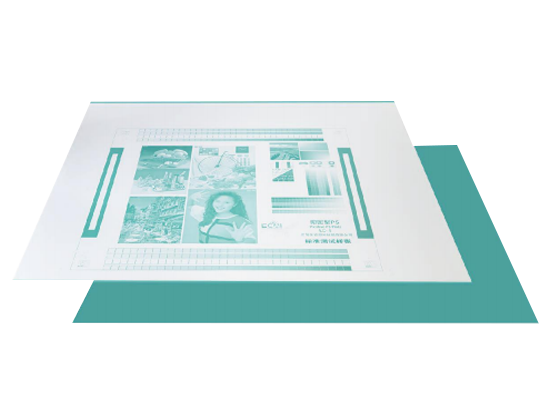
A single-layer plate carries one functional coating on the grained and anodised aluminium base. The design keeps processing simple, with a short development cycle, predictable chemistry consumption and a cost-effective path for general commercial printing, book work and the many jobs that sit in the middle of the run-length range. Because there is only one layer to control, plate-to-plate consistency is straightforward to maintain, and pre-press operators usually find this type of plate forgiving in day-to-day handling and storage.
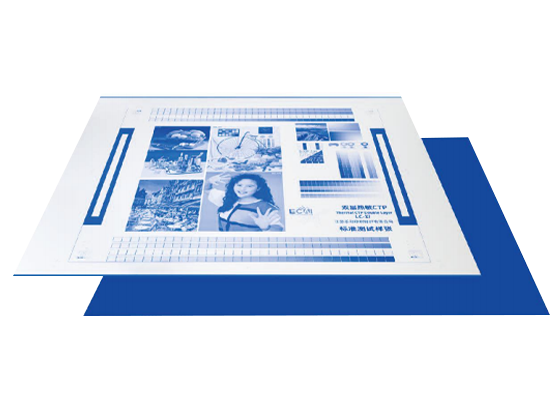
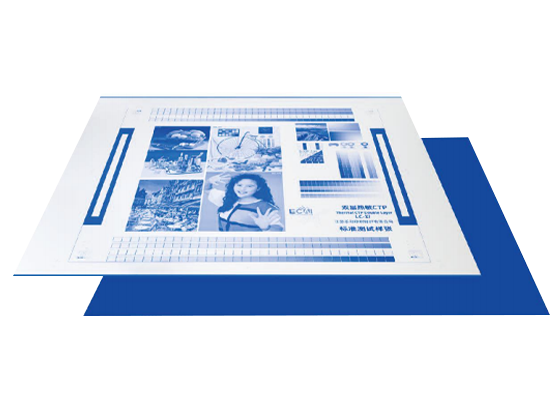
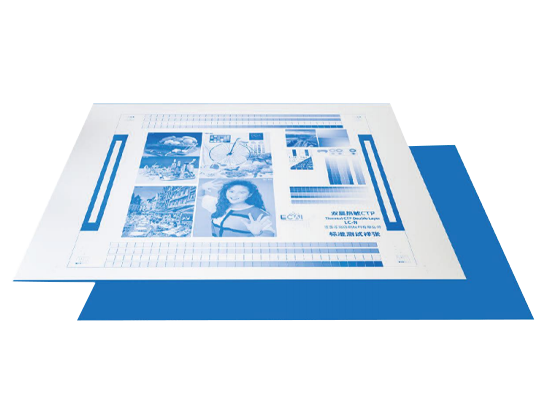 LC-SLecai Thermal CTP plates are able to meet a wide variety of requirements for high-end commercial color printing and newspaper printing. It has the advantages of speedy...View Product →
A double-layer plate splits the jobs the coating has to do. One layer absorbs laser energy and forms the image; the second is tuned for ink receptivity, contrast after development and mechanical durability under the blanket. That division buys wider exposure latitude, tighter dot reproduction in the highlight and shadow ends, and higher run length, which is why packaging, label and long-run commercial printers often prefer it. The trade-off is a more demanding coating process, and that is exactly where a manufacturer's coating experience shows.
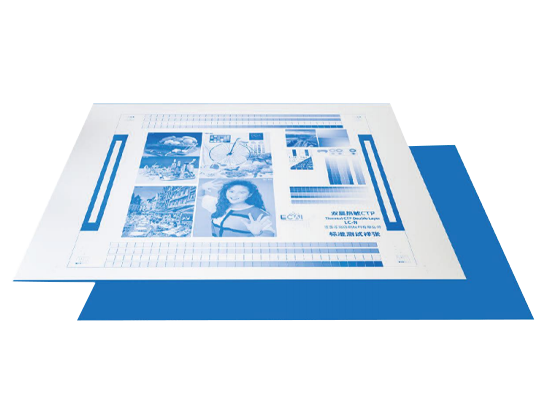
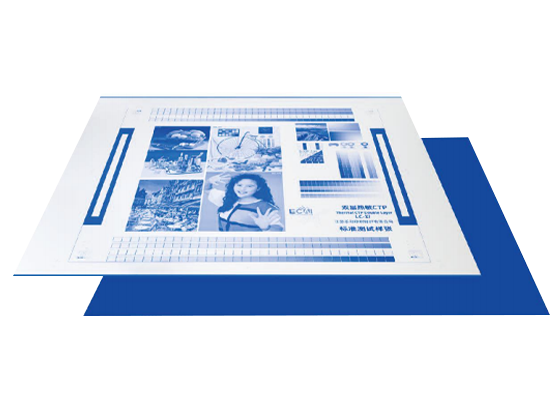 LC-XILecai Thermal-CTP plates are made for UV ink. It is compatible with ordinary ink. When using ordinary ink, the run-length of plates will be doubled. It is use for high...View Product →
Start with the job rather than the price list. If most of your output is 175 lpi commercial printing with several plate changes a day, a single-layer thermal plate rarely lets you down. If you print packaging or labels, or run long jobs where dot gain and plate wear appear early, a double-layer plate usually returns more than it costs. Many shops keep both on the shelf and route work according to run length, substrate and the tolerance of the customer.
Thermal is not the only route to a digital plate, and plenty of plants still run more than one technology under the same roof. Thermal plates are imaged by laser diodes, use a chemistry that is well understood, and offer the widest span from everyday commercial work to long-run production. CTcP plates are exposed with UV light in equipment that some printers already own, which makes them an attractive bridge from film-based platemaking. Positive PS plates remain the traditional analogue option, and processless thermal plates remove the developer step altogether.
| Plate option | Imaging source | Where it fits best |
|---|---|---|
| Thermal CTP plate, single layer | Thermal laser, around 830 nm | General commercial, book and web work with moderate run lengths |
| Thermal CTP plate, double layer | Thermal laser, around 830 nm | Packaging, labels and long runs that demand tight dots |
| Processless thermal CTP plate | Thermal laser, around 830 nm | Shops that want to cut developer use, water and waste |
| Positive CTcP plate | UV light in a CTcP setter | Printers moving from film to digital using existing UV equipment |
| Positive PS plate | Film and a conventional exposure frame | Traditional analogue platemaking and smaller job shops |
If you are weighing two of these options against each other, our technical team has written a side-by-side comparison of thermal CTP and CTcP plates that goes into imaging behaviour, equipment and chemistry in more detail.
A thermal CTP plate only performs as well as the chemistry that processes it. Developer strength, temperature, dwell time and replenishment all move the image in ways that are visible on press. Too little activity and the non-image areas carry scum; too much and the finest dots begin to disappear, so the run length you paid for never materialises. Bath life, filtration and top-up discipline matter just as much as the plate itself.
We supply CTP developer and CTP replenisher alongside our plates because the two have to work as one system. When a customer switches plate type, we recommend matching the chemistry to the coating rather than carrying over whatever is already in the tank, and we are happy to review processing parameters with the pre-press team before the first plate is imaged.
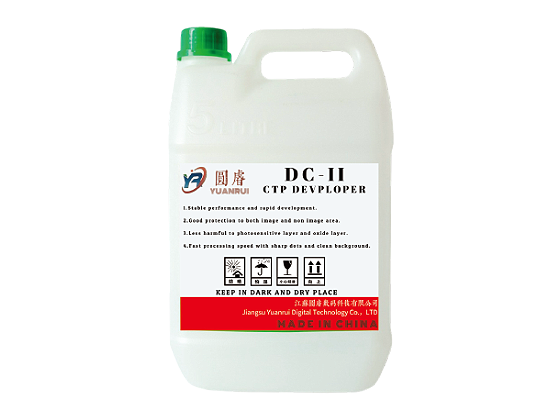
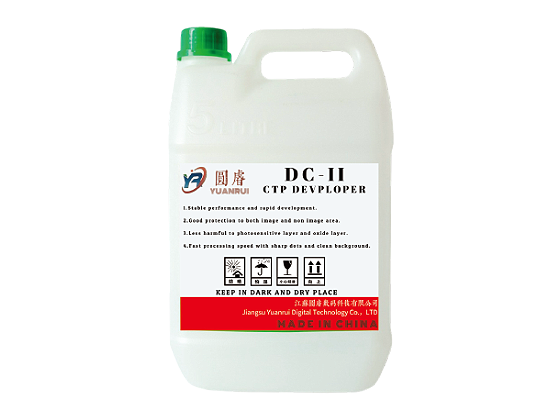 CTP DeveloperApplication Development Thermal CTP Plate Stable performance and rapid development.Good protection to both image and non image area.View Product →
Our group produces more than 40 million square metres of printing plates a year, and our plates are used in over 50 countries, including Germany, Spain, Italy, Brazil, Turkey, Russia and Korea. The company grew from a single plate plant established in 2009 into a group that combines plate production, distribution and technical support. In 2015 we developed a processless thermal CTP plate, an early step in a market that has since moved steadily toward chemistry-light workflows, and we have reported our environmental footprint, carbon verification and social responsibility work in published documents.
Because we coat our own plates, the feedback loop between the pressroom and the coating line is short. A dot problem reported by a customer in one market can be traced back through chemistry, exposure settings and coating parameters without waiting for a third party to respond. If you would like to know more, you can read about our company and its plate-making background, including the group's product range and quality control approach.
Choosing thermal CTP plates is ultimately a question of fit. The right plate is the one that matches your setter, your typical run length, your substrate and your chemistry routine, and it is supported by a manufacturer who can answer questions in the same language your pre-press team uses. Tell us what you print, how long your runs are and which device you image on, and our team will recommend a combination that keeps your platemaking stable and your press running.
CONTACT US
KEEP IN TOUCH

Mobile QR code
Contact Information
No.77,Taisheng Road,Hailing District,Taizhou City,Jiangsu
+86 13961040488+86 19852223565
+86 523 86969522
Copyright © by Jiangsu Lecai Printing Materials Co., Ltd. Rights Reserved.Custom Digital Offset Printing Plates Manufacturers

 English
 Français
 Español
 Indonesia
 عربى
عربى