2026-03-01
When a printing company invests in a Computer-to-Plate (CTP) platemaking system, one of the most consequential technical decisions it makes is the choice between the two dominant CTP technology families: thermal CTP and CTCP (Computer-to-Conventional Plate, also known as violet laser CTP). Both technologies eliminate traditional film-based platemaking and expose the printing plate directly from digital files — but they use different light sources, require different plate chemistries, and have different performance profiles, equipment costs, and operational implications that affect which technology is the better fit for a specific printing operation.
This is not a marginal technical distinction. The light source determines which plates the CTP unit can expose, the light source determines the equipment and maintenance costs, and the plate type determines the chemistry required and whether a processless workflow is achievable. A printing company that selects the wrong technology family for its workflow and volume profile will discover the mismatch in operational costs and workflow limitations that compound over the life of the equipment. Understanding the difference between thermal and CTCP technology — clearly and practically — is the essential first step in making the right investment decision.
Thermal CTP technology uses infrared laser light — typically at wavelengths of 830nm or 1064nm — to expose the printing plate. The laser energy is absorbed by a heat-sensitive (thermosensitive) coating on the plate surface, which undergoes a chemical or physical change in the laser-exposed areas. This thermal reaction creates the image areas on the plate that will carry ink during printing.
The infrared laser wavelength used in thermal CTP is in a range that is invisible to the human eye and does not expose conventional photopolymer or silver-halide plates — it is specifically matched to the thermal coating on thermal CTP plates. This has an important practical consequence: thermal CTP plates can be handled under normal room lighting or under a broad range of safelight conditions without fogging, because ordinary ambient light does not contain significant infrared energy at the wavelengths the plate is sensitive to. This room-light handling capability simplifies the platemaking workflow and reduces the risk of handling-related plate waste.
Thermal CTP imaging heads typically use multiple laser diodes or a fiber-coupled laser in an internal drum, external drum, or flatbed configuration. The thermal imaging mechanism produces very precise dot reproduction at high resolutions — 2400 dpi and above — which is why thermal CTP has been the technology of choice for high-end commercial printing, fine-art reproduction, and applications demanding the highest color fidelity and dot precision.
CTCP stands for Computer-to-Conventional Plate — a terminology that reflects the technology's ability to expose conventional positive PS (photopolymer) plates using a digital imaging system, without requiring the specialized thermal CTP plates that thermal systems demand. CTCP uses violet laser light at wavelengths typically in the 400–410nm range (the violet end of the visible spectrum), which corresponds to the photosensitivity of conventional PS plate coatings and specially formulated violet-sensitive CTP plates.
The violet laser wavelength is visible and does expose conventional photopolymer plates, which means CTCP plates and conventional PS plates must be handled under suitable safelight conditions — they cannot be handled under normal room lighting without risk of fogging. In practice, CTCP platemaking rooms use yellow safelights that filter the blue-violet wavelengths the plates are sensitive to, similar to the darkroom conditions used in traditional PS plate handling.
CTCP technology emerged as a bridge between traditional PS plate workflows and fully digital CTP workflows. A printing company that already uses PS plates and has existing plate processing equipment can transition to digital platemaking using a CTCP system while continuing to work with the same plate chemistry and processing infrastructure it already has — a significantly lower investment barrier than switching to thermal CTP, which requires both a new imaging unit and new thermal-specific plates and chemistry.
| Property | Thermal CTP | CTCP (Violet Laser) |
|---|---|---|
| Laser wavelength | Infrared: 830nm or 1064nm | Violet: 400–410nm |
| Plate type required | Thermal CTP plates (single layer or double layer) | Violet-sensitive CTP plates or conventional positive PS plates |
| Plate handling conditions | Room light or broad safelight — IR-safe handling, no yellow light required | Yellow safelight required — violet wavelengths must be filtered |
| Processing chemistry | Standard alkaline CTP developer; processless (chemistry-free) option available with specific plate types | Standard alkaline developer; compatible with conventional PS plate chemistry |
| Processless (chemistry-free) option | Yes — processless thermal CTP plates available; no developer required | No — CTCP plates require chemical development |
| Image resolution | 2400 dpi and above standard; very fine dot reproduction | 2400 dpi achievable; slightly less precise dot definition than thermal at equivalent resolution |
| Equipment cost | Higher thermal laser sources and imaging heads are more expensive | Lower — violet laser diodes are lower cost; equipment investment is lower than thermal |
| Plate cost | Higher thermal CTP plates are more expensive than PS plates | Lower — violet-sensitive CTP plates or PS plates are less expensive than thermal plates |
| Compatibility with existing PS equipment | Not compatible — requires thermal-specific plates and separate chemistry | Compatible — can use existing PS plate processors and chemistry |
| Best applications | High-end commercial printing, packaging, fine-art reproduction, publications demanding maximum dot precision; processless green printing operations | Commercial printing transitioning from PS workflow, newspaper printing, book and publication printing, and cost-sensitive operations |
Within the thermal CTP category, two structural variants exist — single-layer and double-layer — that have different performance profiles relevant to the printing application:
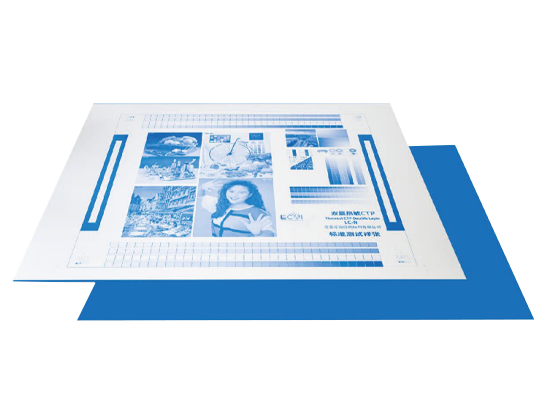
Thermal CTP Single Layer plates have a single thermosensitive coating layer on the aluminum substrate. The laser ablates or thermally alters this single coating layer to form the image. Single-layer plates are simpler in structure, typically lower in cost within the thermal family, and are appropriate for standard commercial printing applications where high print run lengths and extreme dot stability at the highest resolutions are not the primary requirements. They are a practical choice for mid-volume commercial printers using thermal CTP for the first time or for applications with moderate quality and run length requirements.
Thermal CTP Double Layer plates have a two-layer coating structure: a top hydrophilic layer that is ablated by the laser to expose the underlying ink-receptive layer in the image areas. This structure produces sharper image edges, more precise dot reproduction at high screen rulings (175 lpi and above), and better run length performance than single-layer equivalents — the double-layer structure is inherently more resistant to on-press wear because the image layer is protected during the unexposed areas. Double-layer thermal plates are the choice for demanding commercial printing applications: high-quality catalogs, packaging printing requiring precise spot color reproduction, and any work where screen ruling, dot gain control, and run length are critical specifications.
Thermal CTP is the appropriate technology when one or more of the following apply to your operation:
Maximum image quality is required. For commercial printing operations producing high-end catalogs, luxury packaging, fine-art prints, or any product where the highest levels of dot precision, color fidelity, and resolution are non-negotiable, thermal CTP's superior imaging accuracy — particularly with double-layer plates — delivers a quality ceiling that violet/CTCP systems cannot quite match at equivalent screen rulings.
A processless (chemistry-free) workflow is the goal. Only thermal CTP technology currently supports truly processless plates — plates that require no chemical development after laser exposure and go directly from the CTP unit to the press. Processless thermal plates eliminate developer chemistry, developer replenishment and disposal, processor maintenance, and the environmental impact of chemical developer waste. This is increasingly valuable as environmental regulations on chemistry handling and disposal tighten in major markets and as printing companies build sustainability credentials.
High run lengths are required. Thermal CTP double-layer plates, particularly when baked (heat-treated after imaging to harden the coating), can achieve run lengths of 200,000 impressions and above — making them appropriate for publication and packaging printing with long production runs. CTCP plates can also achieve good run lengths, but do not match the peak performance of baked thermal double-layer plates for very long runs.
Plate handling simplicity is valued. Room-light or broad safelight handling of thermal plates reduces the workflow complexity compared to the yellow safelight requirements of CTCP, particularly in fast-paced production environments where plates are moved between different areas of the plant.
CTCP is the appropriate technology when:
The operation is transitioning from a traditional PS plate workflow. A printing company that already has PS plate processing equipment — a plate processor, developer chemistry supply chain, and staff experienced with PS plate handling — can adopt CTCP digital platemaking while preserving the existing processing infrastructure. This significantly reduces the total investment required for the transition to digital platemaking compared to a full thermal CTP system with new chemistry and equipment.
Equipment and plate cost minimization is the primary driver. CTCP equipment has a lower capital cost than thermal CTP, and CTCP-compatible plates (including conventional positive PS plates) are less expensive per plate than thermal CTP plates. For cost-sensitive operations with moderate quality requirements — newspaper printing, book printing, standard commercial work — the lower cost per plate and lower equipment investment make CTCP an economically rational choice.
The operation runs standard screen rulings. At screen rulings up to 175 lpi, which covers the vast majority of commercial printing work, CTCP plates produce image quality that is excellent and indistinguishable in the final printed product from thermal CTP output. The thermal advantage in dot precision becomes relevant at very high screen rulings (200 lpi and above) that are only required for the highest-end applications.
No — thermal CTP units use infrared laser imaging heads that cannot expose violet-sensitive CTCP or PS plates, and CTCP units use violet laser imaging heads that cannot expose thermal CTP plates. The two technologies are not interchangeable within the same imaging unit. When selecting a CTP system, the choice of laser technology (thermal or violet) determines which plate types the unit can expose for its entire operational life. Some manufacturers offer dual-configuration units or upgradeable imaging heads, but these are exceptions rather than the standard — confirm with the CTP equipment manufacturer before assuming interchangeability.
Conventional PS plates are exposed by UV light through a film negative — the traditional analog platemaking process that CTP technology replaces. CTCP exposes PS-type plates directly from digital files using a violet laser without any film intermediate, achieving the same digital workflow advantages as thermal CTP (no film cost, faster platemaking, digital dot precision) while retaining compatibility with PS plate chemistry. The CTCP-exposed plate is processed in the same developer as a conventionally exposed PS plate, and the resulting printing plate is functionally equivalent. The difference is entirely in how the image is created — analog film exposure versus digital laser exposure — not in the plate material or processing chemistry.
Processless thermal CTP plates are suitable for the majority of commercial offset printing applications — commercial printing, packaging, and publication work — and are used successfully in high-volume operations. The limitations to confirm before adopting processless plates: processless plates must be used promptly after imaging (they are sensitive to ambient conditions between imaging and mounting on press); they are slightly more demanding in terms of press chemistry compatibility than conventionally processed plates; and the on-press "processing" that occurs in the first few impressions (the coating residue from unexposed areas is washed away by the dampening system in the first press sheets) requires that the first sheets be discarded as make-ready waste. For the vast majority of commercial printing operations, none of these limitations are significant obstacles, and the elimination of developer chemistry is a compelling operational and environmental benefit.
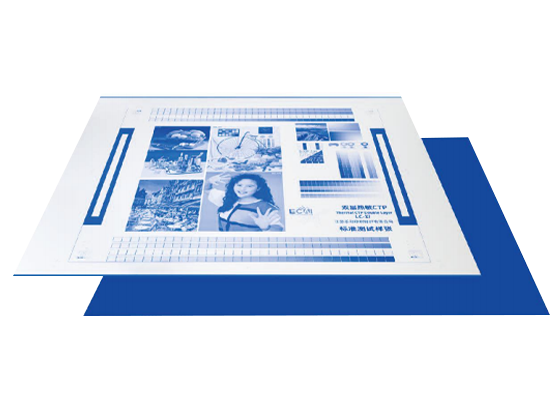
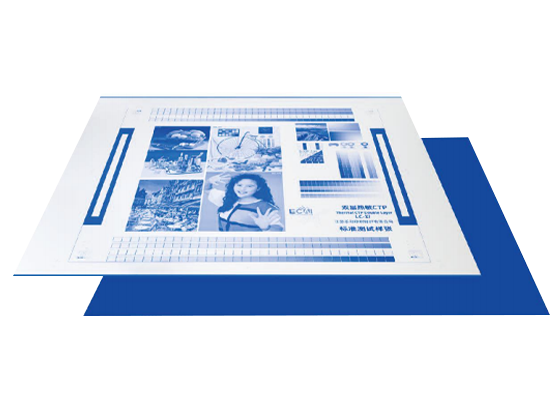
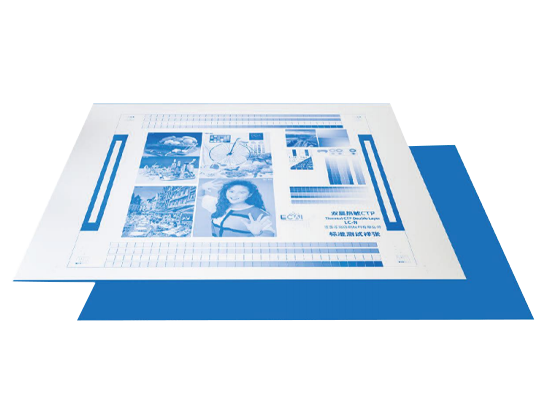
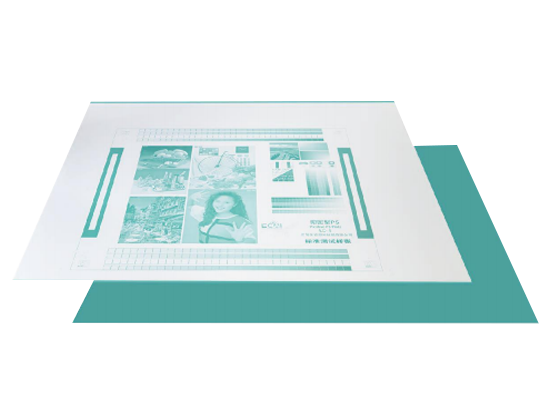
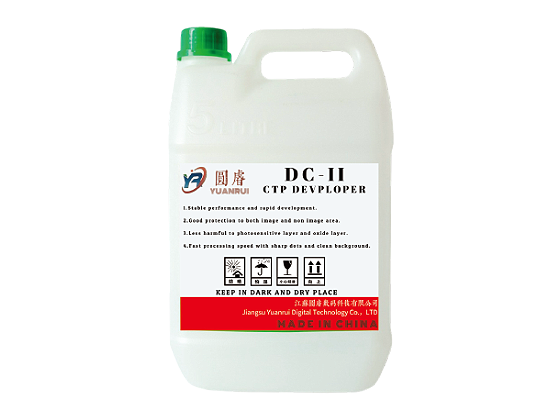
Jiangsu Lecai Printing Materials Co., Ltd., Taizhou, Jiangsu, manufactures the full range of thermal CTP and CTCP printing plates for offset printing operations: Thermal CTP Plate (Process-less / LC-PL), Thermal CTP Plate Double Layer (LC-XI), Thermal CTP Plate Single Layer (LC-S), Positive CTCP Plate Double Layer (LC-VI), Positive CTCP Plate Single Layer (LC-III), and Positive PS Plate (LC-I). CTP Developer and CTP Replenisher chemistry is also manufactured to support the complete platemaking process. Products are available for export worldwide with CE and ISO quality certifications.
Contact us to discuss your CTP plate specification requirements, request samples, and obtain pricing for your printing operation.
Related Products: Thermal CTP Plate (Process-less) | Thermal CTP Plate (Double Layer) | Thermal CTP Plate (Single Layer) | Positive CTCP Plate (Double Layer) | Positive CTCP Plate (Single Layer) | Positive PS Plate
CONTACT US
KEEP IN TOUCH

Mobile QR code
Contact Information
No.77,Taisheng Road,Hailing District,Taizhou City,Jiangsu
+86 13961040488+86 19852223565
+86 523 86969522
Copyright © by Jiangsu Lecai Printing Materials Co., Ltd. Rights Reserved.Custom Digital Offset Printing Plates Manufacturers

 English
 Français
 Español
 Indonesia
 عربى
عربى