2026-03-08
Run length — the number of impressions a printing plate can produce before its image quality degrades to an unacceptable level — is one of the most commercially important specifications in offset printing. It determines how many plates a job requires, directly affecting plate cost per unit of printed output. For a short-run commercial printer producing 5,000-impression jobs, plate run length is almost irrelevant — the job is finished long before any plate approaches its limit. For a packaging printer running 500,000-impression jobs on a high-speed press, a plate that runs 150,000 impressions requires four plate changes per job, each one costing time, material, and make-ready waste — while a plate capable of running the full job without change eliminates all of that cost.
Understanding what determines CTP plate run length — and how to optimize it for a specific printing application — is practical knowledge that reduces plate costs, minimizes press downtime, and ensures consistent print quality across long production runs. This guide explains the concept of run length, the factors that determine it for different plate types, and the measures that extend plate life in production.
Run length (also called print run, plate life, or durability) is expressed as the number of impressions — individual press sheets or repeats — that a plate can produce while maintaining acceptable image quality. What "acceptable quality" means in practice depends on the application: a newspaper printer may accept some visible dot gain increase and minor image softening that would be immediately rejected by a packaging printer maintaining tight color tolerances. The run length specification published by a plate manufacturer is typically the point at which image quality has degraded to the threshold of acceptability under defined standard conditions, not the point of outright plate failure.
Different CTP plate types have significantly different run length capabilities, and the same plate type can produce very different run lengths in different press environments. A plate running at 15,000 impressions per hour on a high-speed commercial press with aggressive ink/water chemistry experiences very different wear conditions from the same plate running at 8,000 impressions per hour on a slower press with milder chemistry. Run length specifications from plate manufacturers are typically given under controlled reference conditions — a single set of operating parameters — and actual production run lengths will vary based on the factors discussed below.
| Plate Type | Typical Run Length (Standard) | Run Length After Baking | Best Applications |
|---|---|---|---|
| Positive PS Plate | 100,000–150,000 impressions | 300,000–500,000+ impressions | Standard commercial offset, book printing, standard commercial color work |
| Thermal CTP Plate (Single Layer) | 100,000–200,000 impressions | 300,000–500,000 impressions | Standard commercial CTP, general commercial offset printing |
| Thermal CTP Plate (Double Layer) | 150,000–300,000 impressions | 500,000–1,000,000+ impressions | High-volume commercial, packaging printing, publications, and long-run labels |
| Thermal CTP Plate (Process-less) | 100,000–150,000 impressions | Not applicable (processless plates generally cannot be baked) | Short-to-medium run commercial work; green/chemistry-free operations |
| Positive CTCP Plate (Single Layer) | 100,000–150,000 impressions | 250,000–400,000 impressions | Standard commercial CTCP, newspaper, and book printing |
| Positive CTCP Plate (Double Layer) | 150,000–250,000 impressions | 400,000–700,000 impressions | Commercial packaging, longer run commercial printing with CTCP equipment |
Note: These ranges are indicative under standard conditions. Actual run lengths in production depend on the factors discussed below and should be confirmed with the plate manufacturer for your specific press and application.
Plate baking — also called plate hardening or post-baking — is a heat treatment process applied to a printing plate after it has been imaged and developed, before it is mounted on the press. The plate is placed in a plate baking oven and heated to temperatures of approximately 220–240°C for a defined time (typically 5–8 minutes). This high-temperature treatment thermally cross-links and hardens the photopolymer coating in the image areas of the plate, dramatically increasing the coating's resistance to the mechanical and chemical wear it experiences during printing.
The effect on run length is substantial: a positive PS plate that runs 100,000–150,000 impressions without baking can achieve 300,000–500,000 impressions or more after baking. Thermal CTP double-layer plates baked after imaging can exceed 1,000,000 impressions in favorable conditions. The trade-off: baking adds a step to the platemaking workflow, requires a plate baking oven (an additional capital investment), and the plate cannot be corrected after baking — any imaging error found after baking requires making an entirely new plate. For long-run jobs where the run length benefit justifies the workflow addition, baking is the standard approach. For short-to-medium run jobs where the plate will be retired long before reaching its unbaked limit, baking adds cost and complexity for no benefit.
Higher press speed means more impressions per hour and a proportionally higher rate of mechanical wear on the plate surface — more ink/water cycles, more blanket contacts, more mechanical pressure events per unit of time. A plate running at 15,000 iph on a high-speed commercial press accumulates mechanical wear faster than the same plate running at 8,000 iph on a slower press. Very high-speed presses — web offset printing at 40,000–80,000 iph or more — require plates with higher mechanical durability ratings than equivalent sheet-fed work at lower speeds.
The chemical aggressiveness of the ink and fountain solution combination is one of the most variable and significant factors in plate run length. Aggressive fountain solution (very low pH, high conductivity, or unusual additive chemistry) can attack the photopolymer coating in the image areas and the anodized layer in the non-image areas, causing premature coating wear, blinding (loss of ink receptivity in image areas), or scumming (ink acceptance in non-image areas). UV inks and some special-purpose inks have chemical characteristics that are more aggressive toward standard plate coatings than conventional offset inks. When using non-standard inks or fountain solutions, plate compatibility should be confirmed with the plate manufacturer before committing to a long run.
The paper or board running through the press has a significant abrasive effect on the plate surface through the blanket contact. Rough, uncoated paper is more abrasive than coated paper; board substrates with higher basis weight impose higher mechanical pressure at the blanket nip. Printing operations that run significant quantities of uncoated or recycled substrates with high surface roughness typically see shorter plate run lengths than the same press running coated paper with equivalent ink coverage.
High image area coverage — large solid areas, heavy ink coverage designs — imposes more stress on the plate than designs with low image coverage. In high-coverage designs, more of the plate surface is involved in ink transfer, and the higher ink film thickness required for solid coverage creates higher mechanical forces at the blanket contact. Print jobs with very high coverage (50%+ of the plate area) may see run length reductions of 20–30% compared to the manufacturer's quoted run length at standard coverage levels.
A significant but often overlooked factor in run length is plate condition before it goes on press. Plates that have been incorrectly stored — exposed to high humidity, high temperature, or direct light — may have degraded photopolymer coatings that perform below specification on press. Plates that have been physically handled with insufficient care — fingerprints on the image area, surface scratches from stacking without interleaving paper — will show corresponding defects during printing. Correct storage conditions (dry, ventilated, dark environment; horizontal or vertical with protective interleaving; away from solvents and chemical fumes) maintain plate performance at specification until use.
The quality of plate development — developer concentration, temperature, immersion time, and replenishment rate — determines whether the photopolymer coating is fully and correctly resolved after imaging. Under-development leaves residual coating in non-image areas that will cause scumming on the press and puts additional wear demand on the blanket and water system to clear the residue. Over-development attacks the image area coating, reducing its mechanical integrity and shortening run length. Correct developer maintenance — monitoring pH and conductivity, regular replenishment, temperature control, and periodic bath changes — is directly connected to achieving plate run length at specification.
The following operational practices reliably extend plate run length toward its specification ceiling:
The earliest indicators of plate wear during a long run are: increasing dot gain in highlight areas (fine dots begin to enlarge as the coating wears and the mechanical dot spread increases); loss of fine detail in shadow areas (very small dot patterns begin to fill in); slight reduction in density consistency across the sheet width in solid areas (the coating wear is slightly uneven across the plate width corresponding to press cylinder geometry). At the first sign of these symptoms, pull a densitometry proof and compare it against the job's approved press proof. If density has shifted beyond tolerance and cannot be corrected by ink key adjustment, the plate has reached the end of its usable life and should be changed.
Yes, significantly. Web offset presses operate at much higher speeds (40,000–100,000+ iph) than sheet-fed presses (typically 10,000–18,000 iph), which increases the rate of mechanical wear on the plate proportionally. Web offset printing also typically uses lower-viscosity inks and different fountain solution chemistry than sheet-fed, and the continuous roll substrate imposes different mechanical dynamics at the blanket nip. A plate quoted for 200,000 impressions on a sheet-fed press should not be expected to achieve the same impression count on a web press — the web environment is more demanding, and the effective run length will typically be lower. Confirm web-specific run length data with the plate manufacturer if web offset is your primary application.
No — a worn CTP plate cannot be meaningfully repaired or re-imaged in the field. Once the photopolymer coating in the image areas has worn below the threshold for consistent ink acceptance, or the anodized layer in non-image areas has been compromised to the point of ink acceptance (scumming), the plate must be replaced. Minor physical damage — a small scratch in a non-critical non-image area — can sometimes be spot-treated with plate correction fluid, but this is a remedy for accidental damage, not for general coating wear. The correct response to a worn plate is replacement with a new plate of the same type, re-registered and re-proofed before the production run continues.
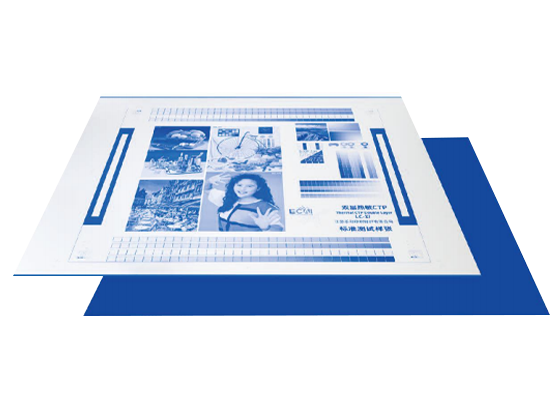
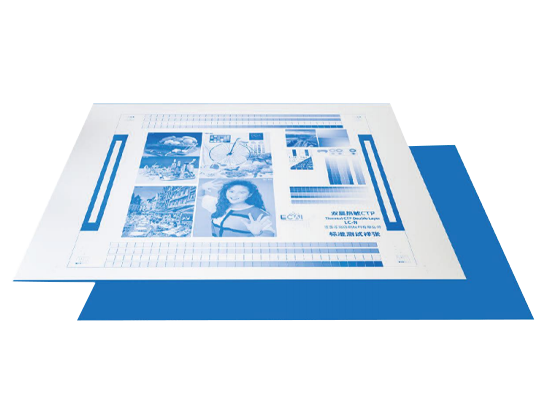
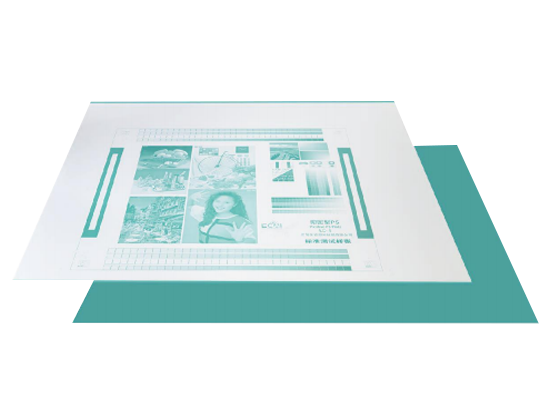
Jiangsu Lecai Printing Materials Co., Ltd., Taizhou, Jiangsu, manufactures the full range of CTP and PS printing plates for offset printing applications requiring different run length performance levels. The LC-XI Thermal CTP Double Layer plate is the company's highest run-length product, suitable for baking and long-run commercial and packaging printing. The LC-S Thermal CTP Single Layer and LC-PL Processless Thermal CTP plate cover standard and green-workflow commercial applications. The LC-VI and LC-III Positive CTCP plates cover double and single-layer CTCP applications across standard commercial printing. CTP Developer (LC-Developer) and CTP Replenisher chemistry are available to support correct developer maintenance for maximum plate run length performance.
Contact us with your press specification, run length requirements, and plate size to receive a product recommendation and quotation.
Related Products: Thermal CTP Plate (Double Layer) | Thermal CTP Plate (Single Layer) | Thermal CTP Plate (Process-less) | Positive CTCP Plate (Double Layer) | CTP Developer | CTP Replenisher
CONTACT US
KEEP IN TOUCH

Mobile QR code
Contact Information
No.77,Taisheng Road,Hailing District,Taizhou City,Jiangsu
+86 13961040488+86 19852223565
+86 523 86969522
Copyright © by Jiangsu Lecai Printing Materials Co., Ltd. Rights Reserved.Custom Digital Offset Printing Plates Manufacturers

 English
 Français
 Español
 Indonesia
 عربى
عربى