2026-06-08
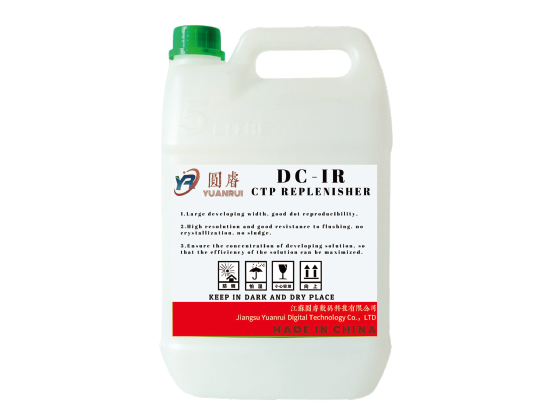
The CTP replenisher is the critical chemical additive that maintains the active concentration and volume of the developer solution, ensuring consistent plate processing quality and extending the usable life of the bath. Without the precise and timely addition of a replenisher, the developer solution rapidly degrades due to oxidation and chemical consumption, leading to inconsistent plate imaging, toning issues on press, and significantly increased operational waste. Understanding and managing the replenisher workflow is not merely a routine maintenance task; it is a fundamental requirement for stable offset printing production.
In a CTP processing workflow, the developer is responsible for dissolving the unexposed areas of the plate's photopolymer or thermal coating. As plates pass through the developer bath, the active alkaline compounds are consumed, and the solution becomes saturated with dissolved resin. The replenisher counteracts this degradation through several key mechanisms.
Every plate processed consumes a specific amount of active alkaline ingredients. If the concentration drops below a critical threshold, the developer will fail to completely dissolve the unexposed coating, leaving scumming or background tint on the plate. The replenisher introduces highly concentrated active ingredients into the bath, restoring the chemical potential to its optimal operating level. This ensures that every plate, whether the first or the hundredth, is developed to the same depth and clarity.
Certain thermal CTP plates rely on a specialized chemical reaction involving peroxide compounds in the developer to break down the cross-linked polymers. As these plates are processed, the peroxide is depleted, and its byproducts alter the pH and conductivity of the solution. The replenisher supplies fresh peroxide and stabilizers, maintaining the delicate chemical equilibrium required for consistent polymer dissolution.
The buffering capacity of a developer refers to its ability to resist changes in pH when acidic or alkaline byproducts are introduced. As dissolved resin accumulates, the buffering agents are overwhelmed, causing the pH to drift. A stable pH is essential because even minor fluctuations can drastically alter development speed and image sharpness. The replenisher replenishes these buffering agents, locking the pH into a narrow, stable operating range.
Replenisher usage is not a static figure; it fluctuates based on multiple operational and environmental variables. Understanding these factors allows operators to adjust their replenishment strategies proactively rather than reacting to spoiled plates.
Merely adding a replenisher to a tank is insufficient; the method and timing of addition dictate the overall success of the chemical management strategy. Implementing structured optimization strategies reduces waste and stabilizes plate quality.
Relying solely on a static, fixed replenishment rate is a common pitfall. Modern processors allow for dynamic adjustment based on the actual work performed. Operators should track the average image coverage of their daily work and adjust the replenisher pump settings accordingly. For example, if a facility transitions from high-coverage commercial work to low-coverage book text, the replenishment rate should be recalibrated to prevent chemical imbalance and excessive waste.
Maintaining the developer at the lowest effective temperature slows down oxidation and unnecessary chemical consumption. Similarly, ensuring proper but not excessive agitation keeps the solution homogeneous without introducing unnecessary air into the bath, which would accelerate oxidation. Proper control of these physical parameters directly reduces the volume of replenisher required over time.
During extended idle periods, such as overnight or weekends, the developer continues to degrade through oxidation. Implementing a "starvation" or idle replenishment mode, where the processor periodically circulates and adds small amounts of replenisher during downtime, preserves the bath's viability. This prevents the need to dump and replace heavily oxidized developer after periods of inactivity.
Failing to manage the CTP replenisher correctly leads to a cascade of negative outcomes, affecting not just the plates but the entire printing operation downstream. The costs of mismanagement far exceed the price of the chemistry itself.
| Mismanagement Type | Chemical Effect | Resulting Plate Defect |
|---|---|---|
| Insufficient Replenishment | Depleted alkalinity and peroxide | Background scumming, incomplete development |
| Excessive Replenishment | Overactive chemical potential | Image sharpening loss, dot reduction |
| Irregular Addition Intervals | Fluctuating pH and conductivity | Inconsistent dot gain, unpredictable press behavior |
When background scumming occurs due to under-replenishment, the plate will carry ink in non-image areas, leading to time-consuming press wash-ups and wasted paper. Conversely, over-replenishment can cause the developer to attack the image areas, eroding fine highlights and destroying critical mid-tone dots. Both scenarios result in remakes, consuming additional plates, chemistry, and machine time.
Effective replenisher management relies on rigorous monitoring and consistent maintenance. Operators must transition from reactive habits to proactive, data-driven chemistry management to ensure long-term stability.
Even with automated replenisher pumps, regular manual testing of the developer bath is essential. Checking the pH and conductivity provides a direct snapshot of the solution's health. If the pH begins to drift despite correct replenisher pump settings, it indicates a potential issue with the pump, a clogged line, or a severely contaminated bath that requires replacement rather than further replenishment.
The replenisher delivery system must be physically maintained to function correctly. Peristaltic pump tubing degrades over time, losing elasticity and delivering inconsistent volumes. A strict schedule for replacing pump tubing is mandatory. Additionally, replenisher lines must be checked for crystallization at the nozzles, which can restrict flow and starve the developer bath of necessary additives.
Maintaining a log of replenisher additions, plate counts, and test results allows operators to identify trends. If the data shows that replenisher consumption has suddenly increased to maintain stable pH levels, it often indicates that the developer bath is reaching the end of its useful life and is becoming saturated with dissolved solids. Documenting these patterns prevents unexpected chemistry failures during critical production runs.
CTP replenishers are concentrated chemical formulations, often containing strong alkalies and oxidizing agents. Handling, storing, and disposing of these chemicals requires strict adherence to safety protocols and environmental regulations.
Operators must always wear appropriate personal protective equipment, including chemical-resistant gloves and eye protection, when handling concentrated replenishers. Splashes can cause severe skin and eye irritation. Furthermore, the replenisher should never be mixed directly with developer concentrates in a small container; the exothermic reaction can cause violent boiling and spattering. Replenisher must always be added directly to the circulating developer bath or through the processor's designated dosing system.
Exhausted developer and replenisher mixtures cannot be poured down standard drains. They must be collected and treated according to local environmental regulations. Many modern printing facilities employ specialized waste chemistry services to neutralize and process these solutions. Optimizing replenisher usage not only saves money but also directly reduces the volume of hazardous waste generated, lessening the facility's environmental footprint.
The printing industry continues to evolve, pushing for more sustainable and efficient processes. CTP chemistry is not exempt from this trend, and the future of replenishers is geared towards smarter, greener, and more integrated solutions.
The most significant trend is the shift towards process-free or chemistry-free CTP plates, which eliminate the need for liquid developers and replenishers. However, for traditional thermal and violet plates that still require wet processing, the industry is moving towards "low-chemistry" solutions. These advanced formulations require significantly less replenisher, operate at lower temperatures, and generate less hazardous waste.
Future processor designs are incorporating smarter sensors that measure the actual chemical potential of the bath in real-time, rather than relying on mechanical pump timers. These intelligent systems will adjust replenisher dosing on a micro-level, compensating for oxidation and plate load instantly. This closed-loop system promises to virtually eliminate human error in chemistry management, ensuring perfect plate quality while minimizing chemical waste.
As these technologies mature, the role of the press operator will shift from manually mixing and testing chemistry to simply monitoring automated systems, allowing for greater focus on color quality and press efficiency.
CONTACT US
KEEP IN TOUCH

Mobile QR code
Contact Information
No.77,Taisheng Road,Hailing District,Taizhou City,Jiangsu
+86 13961040488+86 19852223565
+86 523 86969522
Copyright © by Jiangsu Lecai Printing Materials Co., Ltd. Rights Reserved.Custom Digital Offset Printing Plates Manufacturers

 English
 Français
 Español
 Indonesia
 عربى
عربى