2026-09-24
Printing companies today face a familiar question: how do you bring digital platemaking precision into a workflow that still depends on conventional plate processors? A double layer CTCP plate provides a practical answer. It combines the imaging performance of a digital plate with the convenience of processing on equipment your pressroom already owns, which is why it has become a trusted choice for commercial, packaging, and publication printers alike. But it also raises a natural follow-up: what exactly makes the double layer construction different, and why should your shop care? The answers touch on resolution, run length, and the day-to-day stability of your plate-making process.
CTCP stands for Computer-to-Conventional-Plate. It describes a plate that can be imaged digitally, typically with a violet or UV laser, yet processed using conventional positive-plate developer. The double layer CTCP plate takes this concept a step further. Instead of a single coating, it carries two functional layers over a grained and anodized aluminum substrate.
The double layer design was developed to solve a real trade-off. A single coating that images quickly tends to be less durable on press, while a coating that survives long runs often sacrifices imaging speed and resolution. Splitting the job between two dedicated layers lets the plate optimize both.
The bottom layer bonds tightly to the aluminum base and contributes mechanical strength, chemical resistance, and extended print run capacity. The top layer holds the light-sensitive formulation that reacts quickly to laser exposure and provides excellent resolution and dot reproduction. Together, the two layers create a plate that performs reliably across a wide range of press conditions.
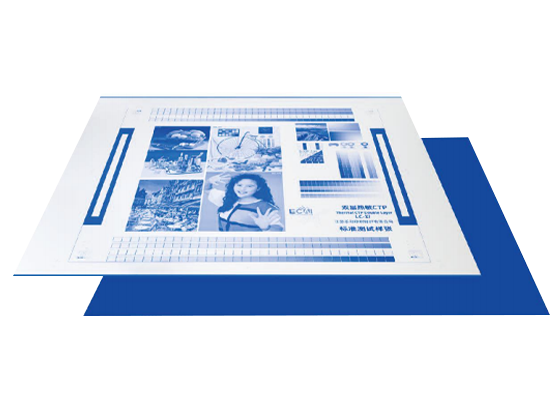
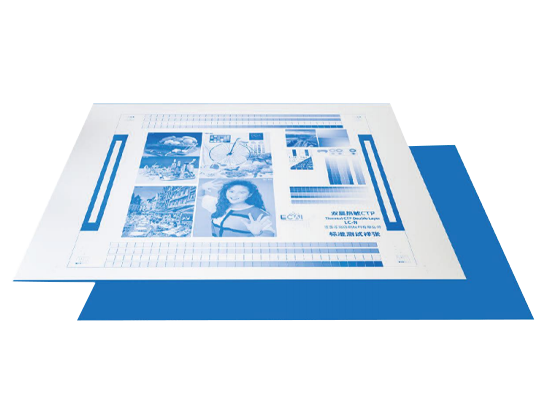
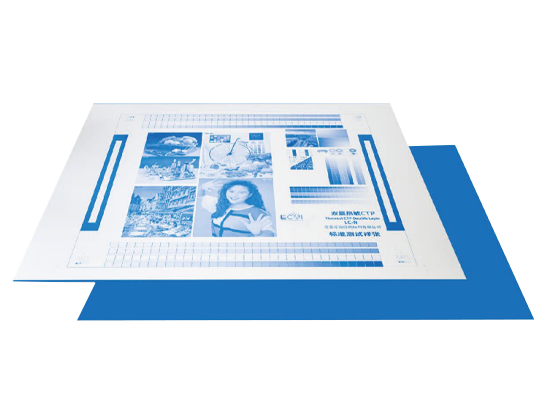
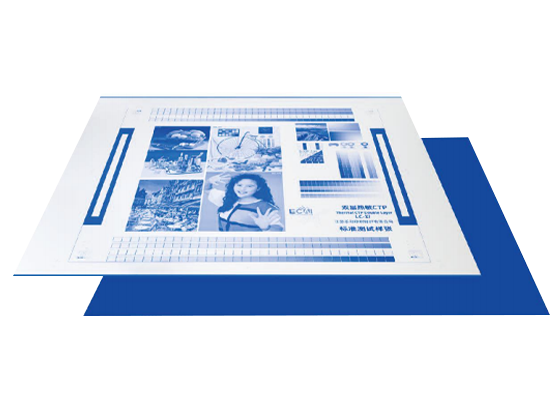 LC-VI Double Layer Positive CTCP Plate for UV and Standard InksThis dual-layer plate is highlighted for its sharp imaging, improved ink-water balance, and longer press life, making it a balanced choice for commercial and newspaper printing jobs.View Product →
For printers who want the flexibility to handle both standard and high-end jobs on one plate type, the double layer structure is a meaningful upgrade over single-layer alternatives. It delivers sharper images, better ink-water balance, and longer press life, while remaining fully compatible with the chemistry and processors most shops already use.
During imaging, the violet or UV laser writes the image onto the top coating, changing the solubility of the exposed areas. The plate then moves to the processor, where a standard positive developer removes the non-image areas. What remains is a precisely formed printing surface carried by the second layer and the aluminum substrate.
Because the two layers are engineered to work together, the plate gains a wider exposure latitude than a single-layer construction. Small variations in laser power, focus, or development time are far less likely to compromise the final result. Operators can maintain a stable process without constant fine-tuning, which is especially valuable in busy production environments.
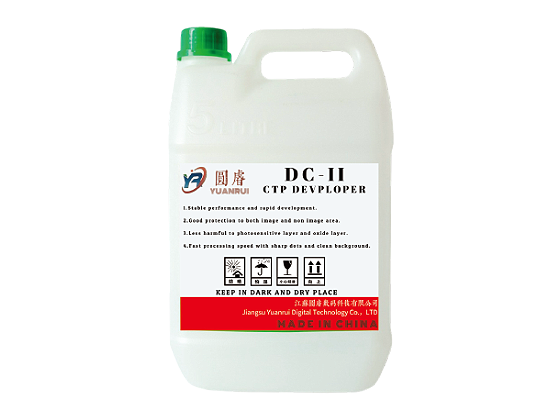
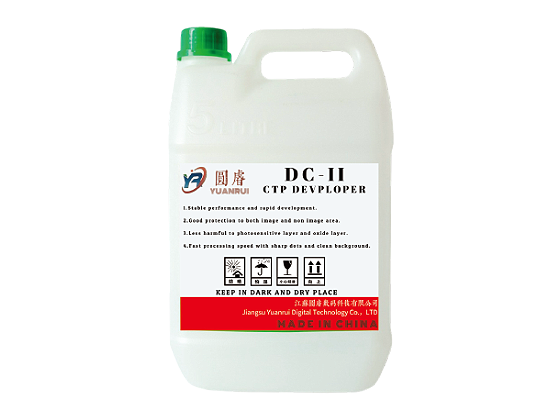 CTP Developer Chemistry for Thermal Plate ProcessingPaired with the double-layer plate, this developer promises stable performance, clean backgrounds, and sharp dots, supporting consistent results across the entire platemaking workflow.View Product →
Consistent processing chemistry also plays a role. A well-matched CTP developer keeps non-image areas clean and preserves the fine-dot structure that makes double layer plates stand out. When the plate and developer are selected as a system, the whole workflow becomes more predictable from imaging to press.
The double layer CTCP plate has earned its place in the pressroom because it solves real production problems. The benefits most frequently reported by printers include:
The table below summarizes the typical differences between single-layer and double layer CTCP plates.
| Property | Single-Layer CTCP Plate | Double Layer CTCP Plate |
|---|---|---|
| Resolution | Suitable for standard work | Enhanced fine-detail reproduction |
| Exposure latitude | Moderate | Wider and more forgiving |
| Run length | Standard | Extended |
| Ink-water balance | Good | Excellent |
| Processor compatibility | Conventional | Conventional |
For shops running a mix of standard and demanding jobs, the double layer construction consistently pays for itself through fewer remakes, faster makeready, and more stable printed color. Over the course of a year, those savings in material, labor, and press time can be substantial, often far more than the small difference in plate cost.
Double layer CTCP plates are versatile enough to handle most offset printing applications. They are commonly used in:
In packaging and label printing especially, double layer CTCP plates have become a dependable answer for jobs that combine fine reverses, small barcodes, and consistent solid ink density across long press runs.
Because the plate combines digital imaging precision with conventional processing, it is also an attractive option for printers who operate existing CTCP or violet setters and want to improve quality without investing in a complete new platemaking line.
Selecting between single-layer and double layer CTCP plates depends on your job mix, press conditions, and quality targets. Consider the following factors:
Cost is also worth weighing honestly. A double layer plate may carry a slightly higher unit price than a single-layer version, but the improvement in uptime and the reduction in waste frequently tip the total cost calculation in its favor.
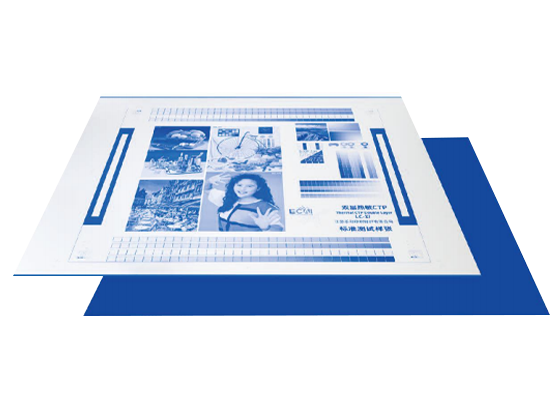 LC-III Multi-Layer CTCP Plate for High-End PrintingPresented as a cost-effective route to higher quality, this multi-layer grain plate offers reliable sensitivity, dot reproduction, and processing tolerance for commercial and publication work.View Product →
For printers who have not yet made the switch, a double layer CTCP plate offers a low-risk path to higher quality. It uses familiar processing, requires no new chemistry, and brings immediate improvements in resolution and press stability.
Jiangsu Yuanrui Digital Technology Co., Ltd. and its sister company Jiangsu Lecai Printing Material Co., Ltd. have spent more than fifteen years manufacturing printing plates for the global market. With an annual production capacity of over 40 million square meters, the LECAI brand supplies printers across more than fifty countries and has earned a place among the world's most recognized plate manufacturers.
Our double layer CTCP plates are produced on the same quality-controlled lines as our thermal CTP and PS plates, with rigorous testing at every stage. From anodizing and graining to coating and final inspection, every step is monitored to deliver consistent exposure, processing, and on-press performance. We also publish our environmental and social responsibility reports openly, so customers can verify the commitments behind the products they buy.
To learn more about our company history and production philosophy, visit our about page.
A double layer CTCP plate is more than a refinement of an old idea. It is a genuinely practical way to bring digital precision into a conventional plate-room workflow, delivering sharper images, longer run lengths, and more stable printing without forcing you to replace equipment or retrain staff.
If you are evaluating plate options for your next production season, a double layer CTCP plate is a smart place to start. Talk to our team to request samples and technical advice, and see how LECAI plates can strengthen your pressroom. You can reach us through our contact page.
CONTACT US
KEEP IN TOUCH

Mobile QR code
Contact Information
No.77,Taisheng Road,Hailing District,Taizhou City,Jiangsu
+86 13961040488+86 19852223565
+86 523 86969522
Copyright © by Jiangsu Lecai Printing Materials Co., Ltd. Rights Reserved.Custom Digital Offset Printing Plates Manufacturers

 English
 Français
 Español
 Indonesia
 عربى
عربى