2026-05-15
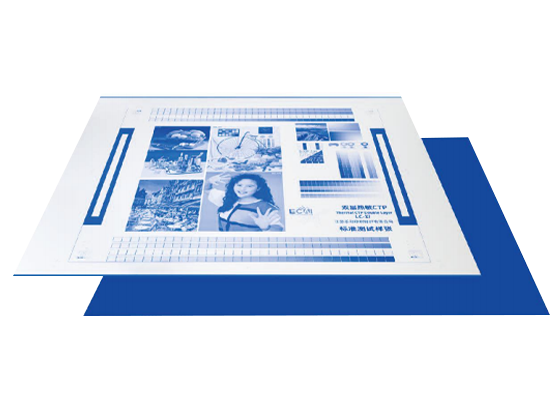
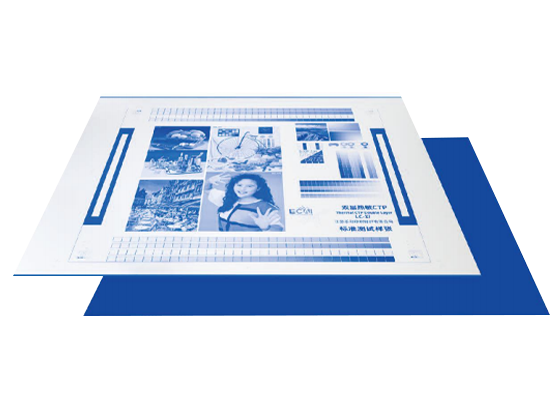
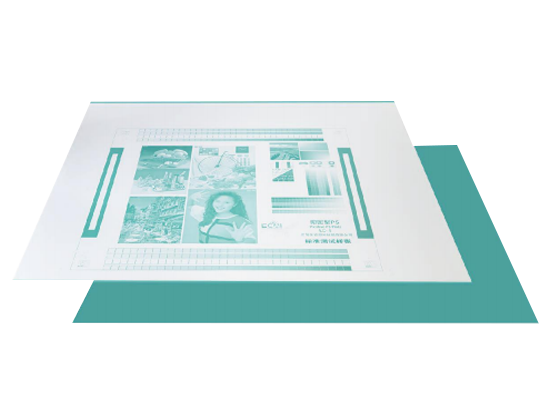
PS plate is the fundamental consumable material in the modern offset printing industry, and professional PS plate manufacturers undertake the vital task of materials research, mass production, and stable supply for the entire printing chain. From daily newspaper printing, commercial brochure production to packaging box and label printing, high-performance PS plates produced by standardized factories are indispensable basic materials. A mature manufacturing enterprise can balance product performance, production cost and delivery efficiency, and provide matched products for printing enterprises of different scales, effectively guaranteeing the smooth progress of printing production work.
In the whole printing industrial chain, PS plate manufacturers occupy the upstream core link. The quality of finished plates directly determines the clarity of printed patterns, color reduction effect and service life of printing equipment. Statistics show that qualified PS plate products can improve the printing yield by more than twenty percent and reduce the frequency of plate replacement in actual production. Manufacturers with complete production qualifications and technical capabilities can effectively avoid printing failures caused by material defects, and bring stable economic benefits to downstream printing processing enterprises.
High-quality aluminum base is the primary raw material for making PS plates, formal manufacturers will strictly screen raw aluminum materials according to industrial specifications. Unqualified raw materials with uneven thickness and unstable surface hardness will be eliminated in advance. After screening, raw aluminum plates will go through surface cleaning, degreasing and polishing procedures to remove surface stains and oxide layers, laying a solid foundation for subsequent coating processing. Strict raw material inspection mechanism can greatly reduce hidden quality troubles of finished products.
This working procedure is key to enhancing the water absorption and ink affinity of PS plates. Manufacturers adopt professional electrolytic sanding and anodizing technology to form dense and uniform oxide film structure on the surface of aluminum plates. The treated plate surface owns good wear resistance and corrosion resistance, and can adapt to long-time repeated printing operation. Different processing parameters will be adjusted according to different product positioning to meet diversified printing use demands.
Photosensitive coating is the functional core layer of PS plates. Professional manufacturers deploy automatic coating equipment to evenly attach photosensitive liquid on processed aluminum base surface. Then constant temperature drying and curing treatment are carried out to stabilize the chemical property of coating. The coating thickness and uniformity are precisely controlled in production, so as to ensure consistent exposure effect and image presentation effect of each batch of plates.
All finished PS plates need to pass multi-dimensional quality detection, covering surface flatness, photosensitive sensitivity, ink-water balance performance and other indicators. Disqualified products will be picked out separately. Qualified products are cut into standard specifications according to customer demands, then packaged with moisture-proof and anti-collision materials to prevent damage and performance attenuation during storage and transportation.
| Inspection Item | Qualified Standard Requirement | Actual Application Influence |
|---|---|---|
| Plate Surface Roughness | Uniform and moderate roughness | Affect ink absorption and printing definition |
| Photosensitive Layer Stability | No falling off and deterioration | Decide service life of printing plate |
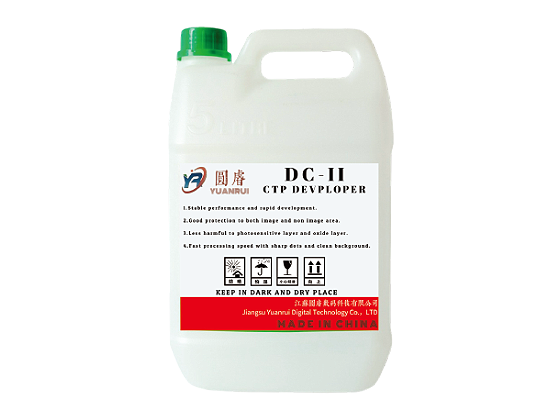
| Corrosion Resistance | Resist chemical erosion of developer | Avoid pattern distortion during development |
| Printing Resistance | Meet conventional printing quantity demand | Reduce plate replacement frequency |
Apart from conventional detection indicators, excellent PS plate manufacturers also take environmental protection and use safety into product evaluation scope. The harmful substance content inside the plate material must conform to industrial environmental protection norms, and no toxic and harmful gas will be produced in the process of exposure, development and printing use. Meanwhile, the product adaptability to different printing equipment and matched chemical reagents is also an important reference standard to measure comprehensive product quality.
According to different photosensitive properties and use methods, products produced by PS plate manufacturers can be divided into multiple categories, which correspond to distinct printing business scenarios respectively. Printing enterprises can select matching plate types based on production batch, printing precision requirement and cost budget, so as to achieve optimal use effect.
Professional manufacturers will continuously enrich product lines according to market changes. Facing the personalized customized printing demand rising in recent years, many factories launch small-batch special specification PS plates, solving the material matching problem of personalized printing orders and expanding the applicable coverage of products.
Regular manufacturers have standardized production workshops and complete quality control systems, and the performance difference of products in different batches is controlled within a reasonable range. Downstream printing factories can avoid production stagnation and waste loss caused by unstable plate quality. Practical cooperation cases prove that long-term stable suppliers can cut the material loss rate of printing enterprises by a large margin, effectively stabilizing product qualification rate.
Large-scale PS plate manufacturers possess abundant raw material reserves and automated production lines, able to cope with sudden large orders and seasonal demand peaks. Meanwhile, reasonable warehouse allocation and logistics matching mode ensure finished products can be delivered to designated places on schedule. For printing enterprises with tight construction period, sufficient supply capacity is the important guarantee to complete orders on time.
Excellent manufacturing teams are equipped with professional technical service personnel. When customers encounter difficulties in plate-making, printing adaptation and material matching problems, manufacturers can provide targeted technical guidance. They can also recommend proper plate types and use schemes combining customers' equipment conditions and printing demands, helping users give full play to product performance and optimize overall printing effect.
Although high-quality PS plate products have certain differences in unit price, their durable printing performance and low failure rate can save repeated material consumption and equipment maintenance expenses in the later stage. Long-term cooperation with formal manufacturers can formulate reasonable pricing modes, and avoid extra cost loss brought by frequent replacement of unstable suppliers, creating stable comprehensive economic benefits for printing enterprises.
Driven by printing technology upgrading and global environmental protection policies, PS plate manufacturers are constantly adjusting production directions and product research focuses. The whole industry presents obvious development trends of high efficiency, environmental protection, intelligence and customization, and backward production modes and low-performance products will gradually be eliminated by the market.
In the future, PS plate manufacturers need to keep pace with technological iteration speed, increase investment in material research and development, constantly upgrade product comprehensive performance, and adapt to the diversified and high-standard development demands of the downstream printing industry, so as to maintain steady market competitiveness in fierce industrial competition.
CONTACT US
KEEP IN TOUCH

Mobile QR code
Contact Information
No.77,Taisheng Road,Hailing District,Taizhou City,Jiangsu
+86 13961040488+86 19852223565
+86 523 86969522
Copyright © by Jiangsu Lecai Printing Materials Co., Ltd. Rights Reserved.Custom Digital Offset Printing Plates Manufacturers

 English
 Français
 Español
 Indonesia
 عربى
عربى