2026-11-06
A thermal CTP plate is one of those components that rarely gets attention until something goes wrong on press. In a modern offset workflow, it is the bridge between a digital file and ink on paper. The plate carries the image, but it also has to survive handling, chemistry, platesetter settings, and the pressure of the press. That is a lot to ask from a thin sheet of aluminum coated with a light-sensitive layer.
CTP stands for computer-to-plate. A thermal CTP plate is an offset printing plate made for infrared laser exposure in a platesetter. Instead of imaging film and burning a conventional plate, the platesetter writes the page directly onto the plate surface. The coating absorbs laser energy, and the exposed areas change in a way that lets the image area accept ink while the non-image area stays water-friendly.
People sometimes use CTP and thermal CTP as if they mean the same thing. CTP is the workflow; thermal is one imaging method. The difference between thermal CTP and CTCP plates is mostly about imaging chemistry, plate handling, and the equipment a shop already runs, not about whether the job is digital. A thermal plate is exposed by heat from an infrared laser, while other CTP plates may use violet or UV light. Thermal plates are generally daylight-stable and easier to handle under normal prepress lighting, although they still deserve sensible care.
At the plate level, the process is straightforward. At the production level, small details decide whether the plate prints cleanly or creates a headache.
Not every thermal plate follows the same route. Some need preheat or baking, some are designed for high run lengths, and processless versions remove the development step. The plate supplier's processing guidelines are not suggestions; they are part of image quality.
A thermal CTP plate is a layered product, and each layer has a job.
Single-layer and double-layer plates use the same broad idea but different coating architecture. A single-layer plate keeps the imaging chemistry in one main photosensitive layer, which can make processing simple and cost-effective. A double-layer plate separates functions across two layers, often to widen exposure and processing latitude, improve durability, or protect the imaging layer. The right answer depends on the work, not on the label.
There is no universal best plate. The table below outlines the practical differences that matter most in daily production.
| What matters | Single-layer thermal CTP plate | Double-layer thermal CTP plate |
|---|---|---|
| Coating design | Imaging chemistry in one main layer | Two functional layers with separate roles |
| Exposure and processing window | Narrower but predictable when chemistry is controlled | Often wider, which helps when conditions vary |
| Run length and abrasion | Good for many commercial jobs; check the recommended run length | Built for longer runs and tougher substrates |
| Handling and storage | Requires clean handling and stable storage | Also requires care; the top layer can be sensitive to scratches |
| Best fit | Short to medium runs, fast plate turnaround, straightforward workflow | Longer runs, packaging, high coverage, and demanding dot control |
For a closer look at the two families, the product cards below are the natural starting point. If you are unsure, a test plate on your own platesetter and press will tell you more than a brochure.
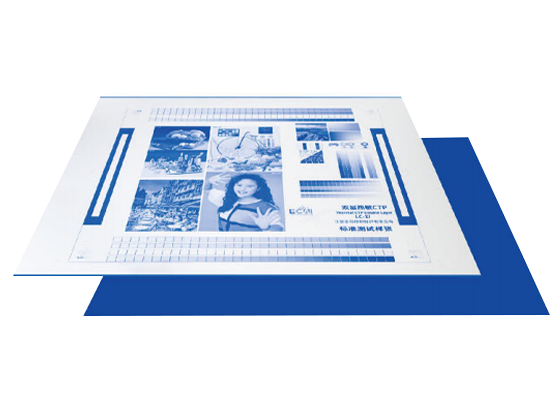
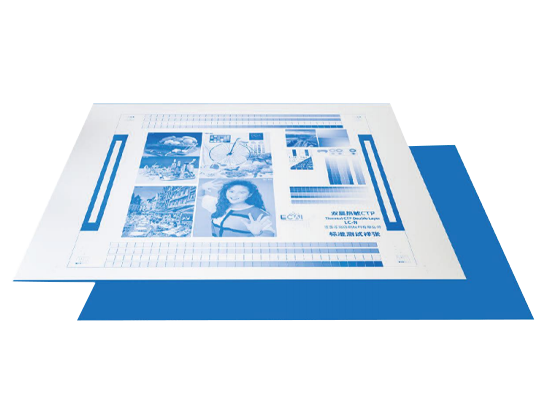 LC-S Single-Layer Thermal CTP PlateSingle-layer thermal CTP plate for commercial color and newspaper work, offering 80,000–100,000 unbaked impressions and compatibility with major platesetters.View Product →
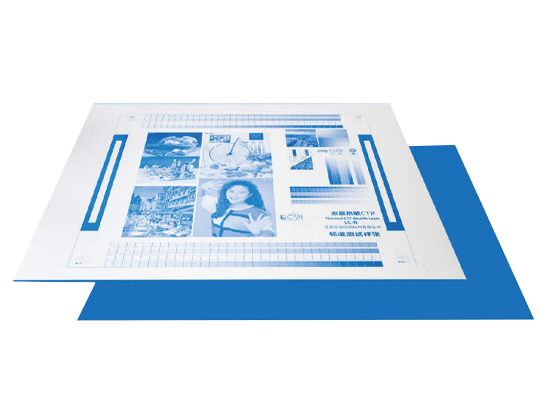
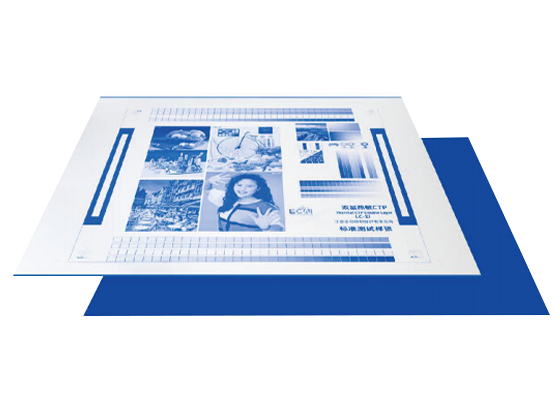 LC-XI Custom Double-Layer Thermal CTP PlateCustom double-layer plate for high-end commercial and newspaper printing, designed for UV ink and offering 100,000–150,000 impressions with ordinary ink.View Product →
Thermal CTP is at home in commercial offset printing: brochures, catalogs, direct mail, book blocks, labels, and folding cartons. It also appears in packaging plants where consistent dot reproduction and plate durability matter across long runs. The plate must match the substrate, ink, fountain solution, and press conditions. A plate that performs well on coated paper with a standard ink set may behave differently on board, metallic ink, or a low-alcohol fountain solution.
In our experience, the plate choice should follow the job mix. A shop that changes plates several times a day may value fast imaging, simple processing, and consistent batch quality. A shop running long, heavy-coverage packaging jobs may need the extra latitude and durability of a double-layer plate. Neither choice is automatically better. The useful question is: which plate gives the most stable result with the least fuss in this specific pressroom?
Plate quality is not only about the coating. Storage and handling can undo a good batch. Keep cartons flat and dry, away from direct sunlight and chemical fumes. Handle plates by the edges, with clean gloves, and avoid bending or scuffing the surface. In the plate room, control developer temperature, replenishment rate, and dwell time. Use control strips and a plate reader to check resolution, dot gain, and consistency. If the image looks good under a loupe but scums on press, check processing and fountain chemistry before blaming the plate.
On our side, we watch coating weight, sensitivity, resolution, and batch consistency because small drift in a coating shows up as a large problem on a press. That is one reason we keep plate making and chemistry support close together. A plate is not a standalone item; it is part of a chain that includes exposure, development, gumming, and press setup.
The environmental side of plate making matters more than it did a decade ago. A conventional thermal CTP workflow uses developer and replenisher, and those chemicals need to be managed, replenished, and eventually treated. Processless thermal plates reduce or remove that step, which can help printers facing tight wastewater rules or looking to simplify the plate room. But processless is not an automatic win for every shop. It has to match the platesetter, the job mix, and the image quality requirements. For many printers, the first step is to tighten chemistry control and reduce waste before changing plate technology.
At our plant, we have worked on processless plate development because we could see the direction of the market. We still believe the right plate is the one that fits the production reality, not the one with the longest feature list.
Choosing a thermal CTP plate is easier when you gather the facts before comparing prices. Note the platesetter model and laser wavelength, the RIP and screening method, the usual run length, the substrate and ink system, the fountain solution, and the plate room's processing and storage conditions. Ask for samples, processing data, and technical support. A plate that arrives with a clear specification but no local support can cost more than it saves.
If you are weighing single-layer against double-layer plates, or simply want a second opinion on a job, our team is glad to talk through the application. We have spent years on the production floor with plates, developers, and the small details that decide whether a job runs smoothly. The goal is not to sell the most complicated plate. It is to find the plate that lets your press do its best work with the least unnecessary effort.
CONTACT US
KEEP IN TOUCH

Mobile QR code
Contact Information
No.77,Taisheng Road,Hailing District,Taizhou City,Jiangsu
+86 13961040488+86 19852223565
+86 523 86969522
Copyright © by Jiangsu Lecai Printing Materials Co., Ltd. Rights Reserved.Custom Digital Offset Printing Plates Manufacturers

 English
 Français
 Español
 Indonesia
 عربى