2026-11-13
Walk into any offset plant and you will find the moment where a digital file stops being data and becomes something physical: the platesetter. The sheet that comes out of it — a thermal CTP plate — is what carries the job from file to press.
We have been manufacturing printing plates for well over fifteen years, and the same questions come up in almost every conversation: what thermal plates actually are, how they differ from CTCP and PS, when a double-layer plate earns its price, and when processless makes more sense. Here are the answers in plain language.
CTP means computer-to-plate: the plate is imaged directly from a digital file, with no film and no contact frame. "Thermal" describes how the image is formed. Instead of a photochemical reaction triggered by visible or violet light, near-infrared laser diodes — typically around 830 nm — deposit energy that becomes heat at the plate surface, and the coating responds to that heat.
A thermal plate is a layered product. The base is aluminium that has been electrochemically grained and anodised: the grain holds fountain solution and keeps non-image areas hydrophilic, while the anodic layer provides wear resistance. Above it sits the imaging layer, only a few microns thick, whose solubility or surface behaviour changes exactly where the laser writes. Some constructions add a thin barrier layer to control heat diffusion and oxygen.
Because imaging depends on heat rather than ambient light, thermal plates are far more forgiving in the prepress room. Most can be handled under normal white light for short periods, which is why so many plants have been able to drop the darkroom and reorganise around the platesetter.
From the operator's seat the sequence is short and highly repeatable:
Processless plates remove step four entirely, and that alone can take several minutes out of every changeover.
Three plate families share floor space in most plants, and they solve different problems. PS plates are exposed through film in a vacuum frame — a mature, inexpensive route for small shops and short runs. CTCP plates, imaged by a violet laser diode around 405 nm, expose quickly but demand yellow safelight discipline. Thermal plates sit at the other end of the scale in durability and handling freedom.
| Characteristic | Thermal CTP | CTCP (violet) | PS plate |
|---|---|---|---|
| Imaging source | Infrared laser, about 830 nm | Violet laser, about 405 nm | UV light through film |
| Room-light handling | Good for short periods | Yellow safelight required | Controlled light required |
| Typical run length | Long | Medium | Medium to long |
| Fine-screen performance | Very stable dots | Good | Limited by film contact |
| Best fit | Commercial and packaging volume | Mid-volume digital prepress | Short runs, simple jobs |
For the technical detail behind the first two columns, our note on thermal CTP and CTCP plates compares sensitivity, resolution and equipment requirements side by side.
Within thermal plates there are two constructions that matter to buyers, and the difference is more than marketing. Both run on the same platesetter; they behave differently on press.
A single-layer plate carries its imaging coating directly on the grained aluminium. The coating is thin, so the plate images with relatively little laser energy and processes quickly — useful when schedules are tight and jobs change often. It suits everyday commercial work, short to medium runs and the mixed workload most sheetfed plants actually have.
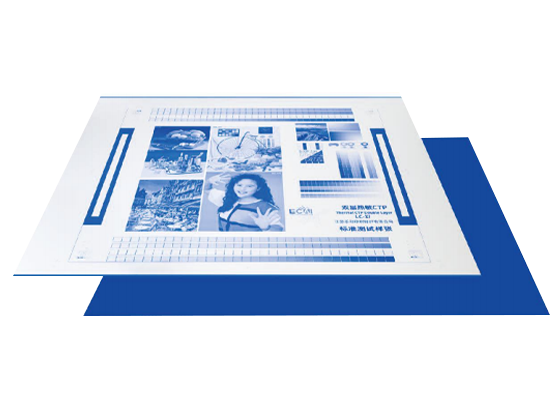
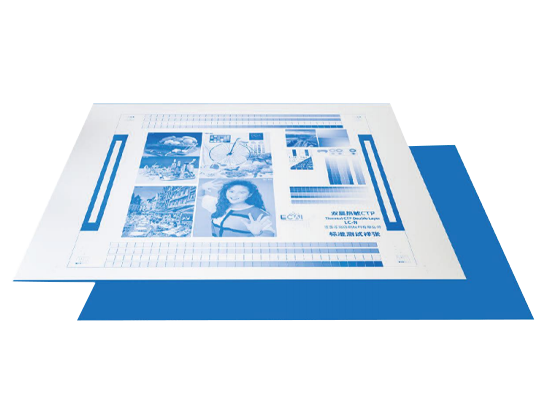 LC-S Single-Layer Thermal CTP PlateFor everyday commercial and short-to-medium runs, this single-layer plate offers quick imaging, precise dots and 80,000–100,000 unbaked impressions.View Product →
A double-layer plate separates the imaging layer from the layer that carries ink. That extra layer buys latitude: lower exposure energy, tighter dot control at fine rulings, more tolerance when developer activity drifts, and noticeably longer run length under aggressive ink and fountain chemistry. For packaging, label and heavy-coverage work the extra plate life usually pays for itself.
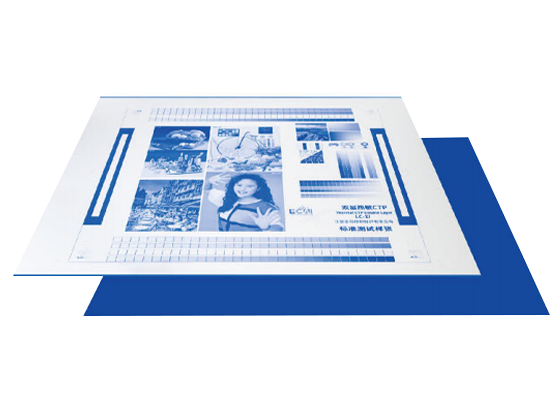
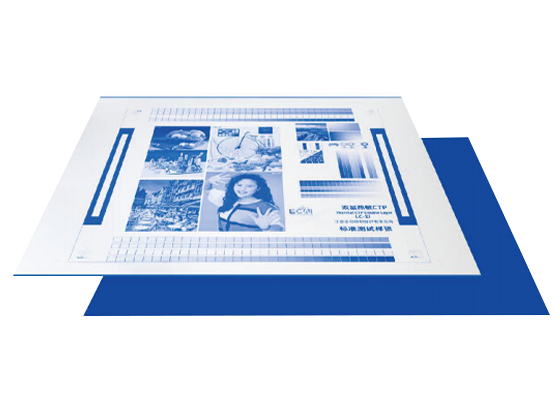 LC-XI Double-Layer Thermal CTP PlateThis double-layer plate supports UV and ordinary ink, extending run length for packaging, label and heavy-coverage work.View Product →
We produce both, because the right answer depends on the press and the work mix rather than on which plate looks better on paper.
Processless plates are exposed in exactly the same way but need no developer. The coating is carried away by the press during the first few dozen impressions, so there is no processor, no developer tank, no replenisher and no liquid waste stream from platemaking.
The trade-offs are real: processless plates cost more per square metre, they need careful control of light and temperature before imaging, and every job change produces some startup waste on press. Where water discharge is tightly regulated or floor space is scarce, those costs are usually offset by savings in chemistry, labour and compliance. We added processless thermal plates to our range in 2015, largely in response to tightening environmental rules in our export markets, and the construction has been refined steadily since.
No plate reaches its rated resolution on exhausted developer. Concentration, temperature, dwell time and replenishment rate all influence whether the coating clears fully, and small drifts show up first as scumming in non-image areas or ragged highlights.
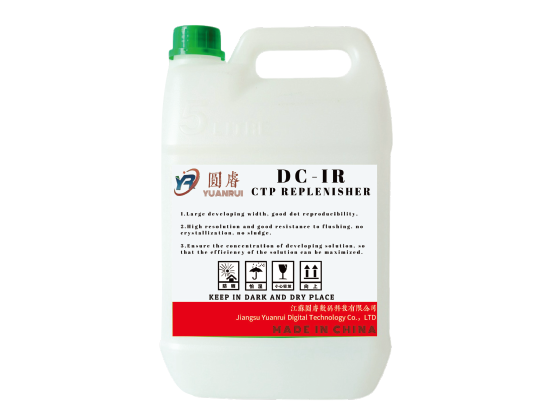
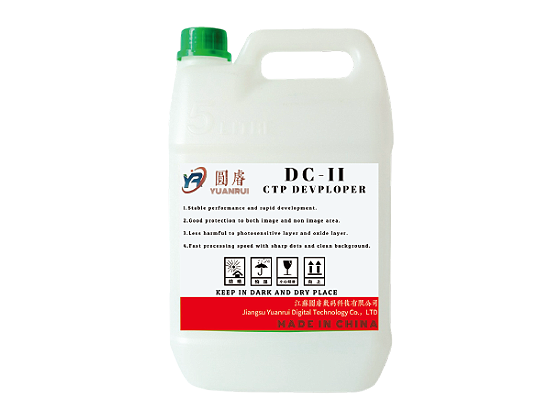
That is why we supply plates and processing chemistry as a matched pair: a developer formulated for a given coating removes it cleanly across the life of the bath, and a replenisher keeps activity stable as plates pass through. Replenishment is the part most often neglected — dosing by plate count works well until plate sizes start to vary, at which point measuring by area rather than by sheet gives far more consistent results.
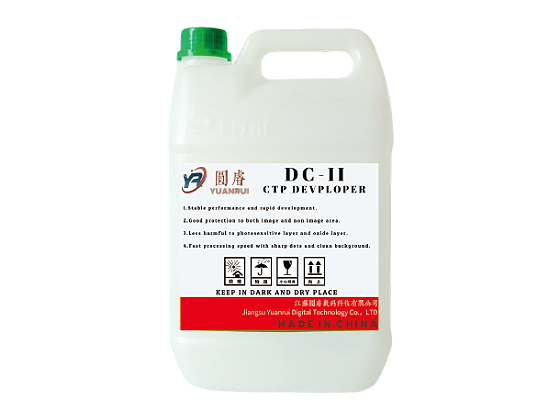 Custom CTP Thermal Plate DeveloperA matched developer for thermal CTP plates, formulated for stable activity, rapid processing and clean dots with area-based replenishment.View Product →
Thermal plates dominate high-quality offset workflows because they hold fine dots and survive long runs. Typical applications include:
The common thread is predictability: same coating, same exposure energy, same behaviour, job after job.
A short trial on your own paper, ink and fountain solution tells you more than any specification sheet.
Plate manufacturing is a coating business before it is anything else. Consistent coating weight, uniform grain, flat sheets and stable packaging are what separate a plate that behaves the same in July and January from one that does not. Our plant produces more than 40 million square metres a year and ships to customers in over fifty countries, from Germany and Italy to Brazil, Turkey, Russia and Korea.
That scale matters less than what sits behind it: fifteen years of production experience, a quality control regime built around batch traceability, and technical people who will tell you honestly when a single-layer plate is the better buy. There is more about our company and its history if you would like the longer story.
Thermal CTP plates are not complicated once the layers are clear in your mind: an aluminium base that carries water, a coating that responds to infrared heat, and a processing route that decides how much of that coating survives. Choose the construction that matches your run length, confirm your chemistry, and work with a supplier who can explain the difference without overselling it.
If you are weighing single-layer against double-layer, or thermal against CTCP, we are always glad to talk it through with samples in hand.
RELATED PRODUCTS
CONTACT US
KEEP IN TOUCH

Mobile QR code
Contact Information
No.77,Taisheng Road,Hailing District,Taizhou City,Jiangsu
+86 13961040488+86 19852223565
+86 523 86969522
Copyright © by Jiangsu Lecai Printing Materials Co., Ltd. Rights Reserved.Custom Digital Offset Printing Plates Manufacturers

 English
 Français
 Español
 Indonesia
 عربى