2026-05-01
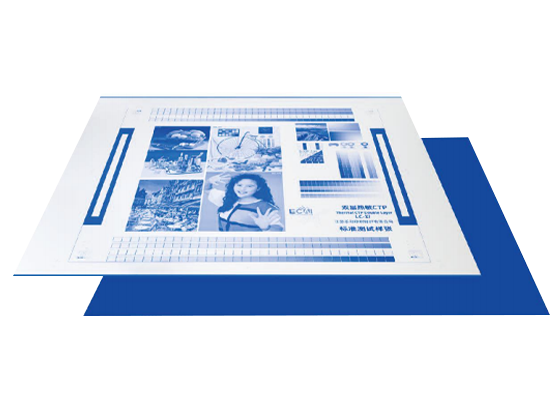
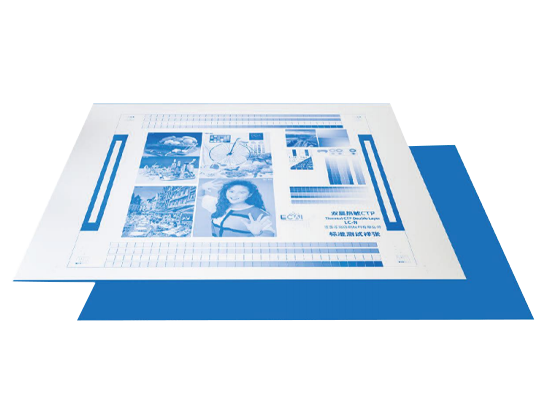
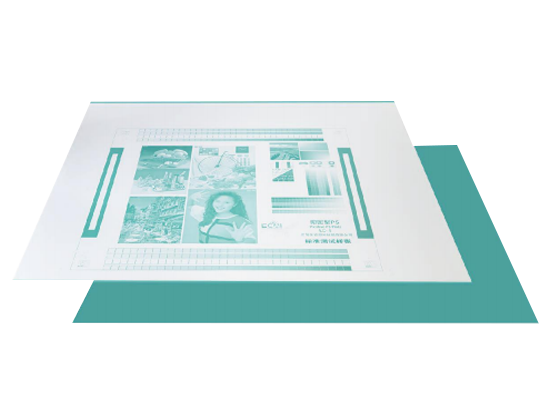
PS Plate, short for Pre-Sensitized Plate, is a specialized light-sensitive printing plate primarily used in offset printing technology. It is a pre-coated light-sensitive material that enables direct imaging exposure without on-site coating, representing one of the most widely applied and cost-effective printing carriers in the modern printing industry.
The core value of PS Plate lies in its stable imaging performance, high production efficiency, and broad compatibility. It supports rapid plate making in commercial printing, packaging printing, publishing printing, and other fields, forming clear graphic and text areas and blank areas after exposure and development, and achieving high-quality batch printing. Compared with alternative printing plates, PS Plate delivers balanced performance and economic benefits, making it an indispensable basic material in the global offset printing supply chain.
In practical industrial applications, the PS Plate has formed standardized production and usage processes. Its performance indicators, such as sensitivity, resolution, and wear resistance, directly determine the printing effect and service life. With the continuous iteration of printing technology, PS Plate remains mainstream due to its mature technology, reliable quality, and easy operation, and will continue to occupy an important position in the printing field in the long term.
PS Plate adopts a multi-layer composite structure, and each layer has a clear functional division, which jointly ensures the stability and imaging effect of the plate. The complete structure includes a base layer, a middle layer, and a light-sensitive coating layer from bottom to top. This layered design is the basis for PS Plate to achieve high-quality imaging and durable use.
The base layer is the supporting skeleton of PS Plate, usually made of lightweight and high-strength materials, with good flatness and corrosion resistance. It can maintain dimensional stability during long-term printing and avoid deformation caused by temperature and humidity changes. The middle layer acts as a bonding transition, enhancing the adhesion between the base layer and the light-sensitive coating, preventing the coating from falling off during printing and development, and improving the overall durability of the plate.
The light-sensitive coating is the core functional layer of PS Plate, which directly determines the imaging quality and sensitivity. The coating is formulated with professional light-sensitive compounds, with uniform thickness and stable chemical properties. After being irradiated by a specific light source, the coating undergoes a photochemical reaction, forming a solubility difference between the graphic area and the blank area, which is the key principle of PS Plate imaging.
High-quality PS Plate coatings have high resolution and strong adhesion, capable of reproducing fine lines, small characters, and gradient patterns, meeting the printing needs of high-precision products such as books, periodicals, and high-end packaging. At the same time, the coating has good chemical stability, is not easy to deteriorate under normal storage conditions, and has a long storage life, which brings convenience to industrial production and inventory management.
PS Plate has strict physical and chemical performance standards, which are key parameters for measuring product quality. Its surface flatness error is controlled within an extremely low range, ensuring uniform ink distribution during printing; the hardness and wear resistance of the coating match the needs of offset printing presses, and can withstand the friction of hundreds of thousands of impressions; the acid and alkali resistance meets the development process requirements, and the graphic area is not damaged during development.
| Structural Layer | Main Material | Core Function |
|---|---|---|
| Base Layer | High-strength supporting material | Provide dimensional stability and support |
| Middle Layer | Bonding transition material | Enhance coating adhesion |
| Light-sensitive Coating | Special light-sensitive compound | Complete photochemical imaging reaction |
The manufacturing of the PS Plate is a precision chemical and mechanical processing process, which is completed through a series of standardized steps to ensure product consistency and stability. The entire production line is carried out in a closed, dust-free, and constant temperature and humidity environment to avoid external factors affecting the performance of the light-sensitive coating.
The first step is base treatment, including surface cleaning, polishing, and activation, to remove impurities and oxides on the surface and improve the bonding force with the coating. The second step is coating preparation, where light-sensitive materials, solvents, additives, etc., are mixed in a precise proportion to form a uniform coating solution. The third step is automatic coating, using high-precision coating equipment to apply the coating solution to the base layer with a fixed thickness, ensuring uniform coating without bubbles or scratches.
After coating, it enters the drying and curing stage, where the solvent in the coating is volatilized at a controlled temperature to form a stable solid coating. Subsequently, cutting, inspection, and packaging are carried out according to the required specifications. The entire process is controlled by automated equipment, with manual intervention only in the monitoring and adjustment links, which greatly improves production efficiency and product qualification rate.
Quality control runs through the entire manufacturing process of PS Plate, and each link has clear testing standards. Coating thickness is one of the core control indicators, and online monitoring equipment is used to detect in real time, with the error controlled within a tiny range. Uneven coating thickness will lead to unstable exposure and poor printing effect, so it is strictly controlled in production.
Sensitivity testing is another key link. Samples are taken from each batch of products for exposure and development tests to verify whether the photochemical reaction speed and imaging effect meet the standards. At the same time, wear resistance, adhesion, and storage stability tests are carried out to ensure that the products can adapt to different usage environments and printing equipment.
Qualified PS Plate products must pass full inspection of appearance and performance, without defects such as scratches, spots, and coating shedding. More than 98% of high-quality PS Plate finished products can meet industrial-grade printing requirements, and the defective rate is controlled at an extremely low level, which guarantees the continuity of industrial printing production.
Modern PS Plate manufacturing pays attention to environmental protection and safety, adopting environmentally friendly raw materials and closed production processes to reduce the emission of volatile organic compounds. The waste liquid and waste materials generated in the production process are collected and treated uniformly, complying with global industrial environmental protection standards.
In terms of production safety, the workshop is equipped with explosion-proof, fire-proof, and ventilation equipment, and operators receive professional training to avoid safety risks caused by chemical materials. At the same time, the automated production line reduces the contact time between personnel and raw materials, ensuring the health and safety of operators.
The usage of PS Plate is centered on the plate making process, which is simple to operate and highly efficient, suitable for large-scale rapid plate making in printing plants. The entire process includes four core steps: exposure, development, drying, and inspection, and can be put into printing equipment after completion.
Exposure is the first step: place the PS Plate and the film together in an exposure machine, and irradiate with a specific wavelength of UV light. The light-sensitive coating in the blank area undergoes a photochemical reaction, while the coating in the graphic area blocked by the film remains unchanged, laying the foundation for subsequent development. The exposure time is adjusted according to the sensitivity of the plate, usually controlled within a few minutes, with high efficiency.
Development uses a special developing solution to dissolve the coating in the unexposed area, retaining the coating in the exposed graphic area, forming a clear printing plate. The development temperature and time need to be controlled accurately to avoid incomplete development or excessive development damaging the graphic area. After development, clean and dry the plate to remove residual developing solution and moisture.
The operating parameters directly affect the imaging quality of PS Plate, and standardized parameter settings are the key to obtaining high-quality printing plates. The exposure intensity is matched with the sensitivity of the plate; too low intensity will lead to unclear imaging, and too high intensity will cause excessive reaction and damage the coating.
The developing solution concentration is maintained within the standard range, and regular detection and supplementation are required during use. The development temperature is usually controlled at 20-25°C, which is the optimal temperature for the coating reaction. Too low temperature will slow down the dissolution speed, and too high temperature will easily cause the coating to fall off.
In the actual use of PS Plate, common problems such as unclear graphics, incomplete development, and coating shedding may occur, most of which are caused by improper operation or parameter deviation. Unclear graphics are usually due to insufficient exposure or low light source intensity, which can be solved by extending the exposure time or checking the exposure equipment.
Incomplete development is caused by low developing solution concentration or too short development time, which can be improved by adjusting the solution ratio or extending the development time appropriately. Coating shedding is mostly due to poor base treatment or excessive development temperature, and it is necessary to check the plate quality and adjust the development parameters.
Most faults can be avoided through standardized operation and regular equipment maintenance. Printing operators only need to master the basic operating points and parameter standards to ensure the normal use of PS Plate and reduce the occurrence of production problems.
Publishing and commercial printing is the largest application field of PS Plate, covering books, periodicals, newspapers, brochures, posters and other products. Newspapers and periodicals require high-speed and large-volume printing, and PS Plate has good wear resistance and stable imaging, which can meet the needs of continuous printing of hundreds of thousands of copies, with clear text and bright patterns.
Commercial printed materials, such as posters and brochures, have high requirements for color reproduction and fineness. PS Plate can accurately restore the design draft, with uniform ink distribution and natural color transition, meeting the high-standard visual effect needs of commercial publicity. In this field, PS Plate accounts for more than 60% of the market share due to its high cost performance.
Packaging printing is another important application scenario of the PS Plate, including food packaging, cosmetic packaging, gift packaging, industrial product packaging, etc. Packaging products usually require waterproof, oil-proof, and wear-resistant printing effects, and PS Plate can match with special inks to achieve diversified printing effects.
Label printing has high requirements for small-size, high-precision graphics and text, and PS Plate can reproduce fine barcodes, logos, and descriptive text, with clear edges and no blurring. At the same time, the plate-making speed is fast, which adapts to the small-batch and multi-variety production characteristics of label printing.
In addition to traditional printing, PS Plate is also widely used in industrial printing and special printing fields, such as metal surface printing, plastic product printing, and decorative pattern printing. It has good compatibility with different printing carriers and can be applied to various special printing processes after matching with the corresponding equipment.
Special printing fields such as architectural decoration and textile printing also use PS Plate for plate making, relying on its flexible adaptability and stable performance. With the expansion of printing application scenarios, the application scope of PS Plate is also continuously expanding, and it is gradually penetrating into more emerging industrial fields.
| Application Field | Typical Products | Core Advantages |
|---|---|---|
| Publishing Printing | Books, Newspapers, Periodicals | High wear resistance, large-volume printing |
| Commercial Printing | Posters, Brochures | High precision, good color reproduction |
| Packaging Printing | Food Packaging, Labels | Strong compatibility, fast plate making |
PS Plate has outstanding cost performance, which is the primary reason for its wide application in the printing industry. The manufacturing process is mature, the raw materials are easy to obtain, and the production cost is controllable, making the product price affordable for most printing enterprises. Compared with high-end digital printing plates, PS Plate can save 30%-50% of plate making costs under the premise of meeting basic printing needs.
In terms of use cost, PS Plate has low requirements for equipment, and can be used with ordinary offset printing presses and plate making machines, without additional investment in high-end equipment. The operation is simple, and ordinary operators can master it quickly, reducing labor training costs. The long service life and low scrap rate further reduce the comprehensive use cost.
PS Plate is pre-sensitized and can be used directly after opening the package, eliminating the on-site coating process and greatly improving plate making efficiency. The entire plate making cycle is short, and a batch of printing plates can be completed in a few minutes, adapting to the fast-paced production needs of the printing industry.
The performance is stable and reliable, with strong adaptability to temperature and humidity. It can be used normally in most regions and environments without obvious performance attenuation. The imaging effect is consistent, and the same batch of plates can ensure the same printing quality, avoiding quality differences caused by plate problems.
PS Plate has excellent compatibility, suitable for various types of offset printing presses, inks, and developing solutions, and has no strict matching restrictions. It can be used with water-based inks, oil-based inks, and UV inks to meet different printing process needs.
With the development of printing technology, PS Plate is also continuously upgraded and optimized. New products with higher sensitivity, higher wear resistance, and more environmental protection are launched successively, which can adapt to the iterative upgrading of printing equipment and processes. This scalability ensures that PS Plate can maintain its competitiveness in the industry for a long time and will not be quickly eliminated by technological updates.
PS Plate is a light-sensitive chemical material, and correct storage is crucial to maintaining its performance. It should be stored in a dark, dry, and low-temperature environment, away from direct sunlight and strong light sources to avoid premature photochemical reaction leading to failure. The storage temperature is controlled at 10-30°C, and the relative humidity is 40%-60%.
The plates should be placed flat and stacked neatly to avoid extrusion and deformation, and scratches on the surface coating should be prevented. The shelf life of unopened PS Plate is usually several months to one year, and it needs to be used within the validity period. After opening, it should be used as soon as possible, and the remaining plates should be sealed and stored to avoid moisture and dust contamination.
During use, avoid direct contact with the plate surface with hands to prevent fingerprints and oil stains from affecting the imaging effect. Use special tools to take and place the plates, and keep the operating table clean and free of impurities. After the printing plate is completed, it can be properly coated with a protective agent to extend the service life and improve the wear resistance during printing.
For unused plates and waste plates, classified treatment should be carried out. Waste plates can be recycled and processed to realize the reuse of base materials and coating materials, which is in line with environmental protection and resource recycling concepts. Regular maintenance of plate making and printing equipment can also reduce the wear and damage of PS Plate during use.
In the future, the development of PS Plate will focus on environmental protection, high performance, and intelligence. Environmentally friendly PS Plate using non-toxic and pollution-free raw materials will become the mainstream, reducing the impact on the environment and human health. High-performance products with higher sensitivity, higher resolution, and longer service life will meet the needs of high-end printing.
Intelligent manufacturing technology will be further applied to PS Plate production, realizing full automation and digitalization of the production process, and improving product consistency and stability. At the same time, PS Plate will be more closely integrated with digital printing technology, developing new products compatible with digital imaging systems, expanding application scenarios and maintaining its important position in the printing industry.
Against the background of the continuous development of the global printing industry, PS Plate, as a mature and reliable printing material, will continue to be widely used. With technological iteration and product upgrading, it will better meet the diversified needs of the printing industry and contribute to the high-quality development of the industrial chain.
CONTACT US
KEEP IN TOUCH

Mobile QR code
Contact Information
No.77,Taisheng Road,Hailing District,Taizhou City,Jiangsu
+86 13961040488+86 19852223565
+86 523 86969522
Copyright © by Jiangsu Lecai Printing Materials Co., Ltd. Rights Reserved.Custom Digital Offset Printing Plates Manufacturers

 English
 Français
 Español
 Indonesia
 عربى
عربى