2026-04-22
When evaluating the entire commercial printing workflow, the conclusion is straightforward: a printing plate manufacturer is the definitive foundation of consistent, high-fidelity print quality. While printing presses, inks, and substrates often receive the most attention, none of these elements can perform optimally if the imaging matrix transferring the design is flawed. The manufacturer responsible for engineering these plates dictates the resolution limits, ink transfer efficiency, and overall durability of the entire production run. Without a precisely manufactured plate, even the most advanced printing press will yield subpar results, making the selection of the right manufacturing partner a critical business decision rather than a mere procurement task.
The role of a printing plate manufacturer extends far beyond simply etching metal or coating polymers. It involves a deep understanding of fluid dynamics, light physics, and material science. Every microscopic pit, every raised surface, and every laser-ablated dot on a plate serves a specific purpose in controlling how ink interacts with the substrate. Therefore, understanding the capabilities, technologies, and quality control measures of these manufacturers is essential for anyone involved in commercial printing, packaging, or publishing.
The methods employed by a printing plate manufacturer have evolved drastically over the past few decades, shifting from hazardous chemical processes to highly precise digital and physical ablation techniques. Understanding these foundational technologies is necessary to grasp how different plates perform under the extreme pressures of high-speed printing.
The most prevalent technology in modern plate making is thermal laser imaging. In this process, a high-powered infrared laser strikes a specialized coating on the plate, causing a physical or chemical change that either becomes receptive or repellant to fountain solution and ink. Thermal plates are highly favored because they can be handled under standard yellow safe-light conditions without premature exposure. Thermal imaging consistently achieves resolution capabilities exceeding thousands of dots per inch. This extreme precision allows for the reproduction of extremely fine text, smooth gradients, and intricate halftone dots without the risk of dot bridging or loss.
UV laser imaging, while less common than thermal, is utilized for specific plate chemistries that respond to shorter wavelengths. This method is particularly useful for certain flexographic plates where deep, highly defined relief structures are required for corrugated cardboard printing. The energy delivered by the laser must be meticulously calibrated by the manufacturer to ensure clean, steep shoulders on the raised printing elements.
Unlike processes that require a coating to be exposed and washed away, direct digital engraving physically removes material from the plate surface. A high-powered laser directly vaporizes the non-printing areas, leaving the desired image in relief. This method is predominantly used by a flexographic printing plate manufacturer. The primary advantage of direct engraving is the elimination of chemical processing entirely, resulting in zero volatile organic compound emissions during the platemaking stage. Furthermore, direct engraving allows for the creation of micro-textured surfaces on the printing elements, which helps control ink transfer and reduces the trapping of air between the plate and the substrate.
Traditional photopolymer plate production involves exposing a light-sensitive polymer to UV light through a photographic negative. The areas exposed to light cross-link and harden, while the unexposed areas remain soft and are washed away using solvents or water. Although this is an older technology compared to direct digital methods, it remains highly relevant, particularly in packaging. A skilled printing plate manufacturer will continuously refine the formulations of these photopolymers to increase their exposure latitude, meaning they are more forgiving of minor fluctuations in UV light intensity, leading to more consistent results across large production batches.
A reliable printing plate manufacturer does not produce a one-size-fits-all product. The demands of a high-speed newspaper press are entirely different from those of a wide-format corrugated box printer. Consequently, plates are strictly categorized by the printing process they are engineered to serve.
| Printing Process | Plate Surface Type | Primary Substrates | Typical Run Length |
|---|---|---|---|
| Offset Lithography | Planographic | Coated paper, uncoated paper | Medium to Very Long |
| Flexography | Relief | Plastic films, corrugated board | Short to Long |
| Gravure | Intaglio (Recessed) | Publication paper, foil, vinyl | Extremely Long |
| Screen Printing | Stencil | Textiles, glass, irregular shapes | Very Short to Medium |
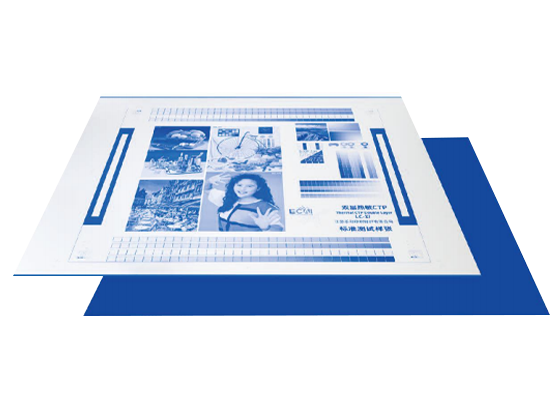
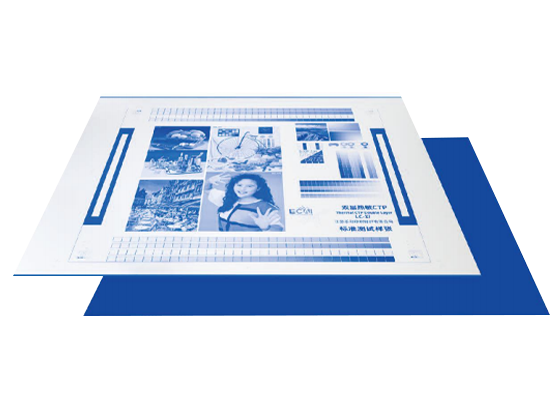
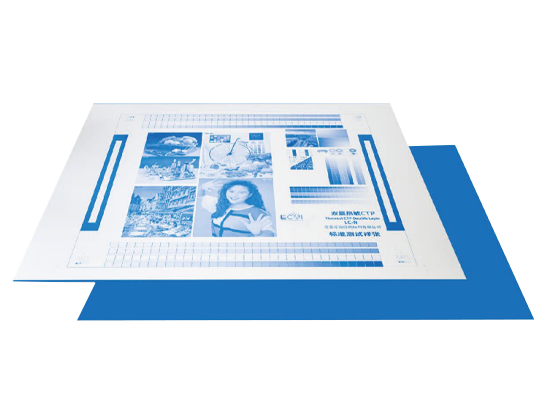
Offset printing relies on the principle that oil (ink) and water (fountain solution) do not mix. An offset printing plate manufacturer must engineer a surface where the image areas are highly receptive to ink and repellant to water, while the non-image areas are highly receptive to water and repellant to ink. This is typically achieved using aluminum substrates that are electrochemically grained and anodized to create a porous, water-attracting surface, which is then coated with a light-sensitive or thermally sensitive polymer. The precision of this balance dictates whether a press will suffer from scumming (ink in non-image areas) or toning (background staining), making the manufacturer's surface treatment processes absolutely critical.
Flexography requires a plate with a raised image area, similar to a rubber stamp, but with microscopic precision. A flexographic printing plate manufacturer deals primarily with photopolymers or elastomers. The greatest challenge in flexographic plate manufacturing is managing the floor of the plate and the shoulder of the raised dots. If the shoulder is too steep, the dot can easily shear off under the pressure of the press. If it is too sloped, the dot will spread, causing dot gain and muddy mid-tones. Advanced manufacturers utilize specialized light sources and optical masks to create a perfectly controlled, flat-topped dot that resists distortion and transfers ink predictably.
Gravure plate manufacturing is an entirely different domain, typically involving the engraving of millions of microscopic cells into a copper or steel cylinder. The depth and volume of these cells determine how much ink is transferred to the substrate. While often referred to as cylinders rather than flat plates, the manufacturing principles of precise material removal remain identical. Screen printing plates are stencils, where the manufacturer must ensure the mesh openings are completely clear of emulsion in the image areas, while the non-image areas are thoroughly sealed to prevent ink leakage.
The performance of a printing plate is only as good as the raw materials used to construct it. A premier printing plate manufacturer invests heavily in material science to ensure that the base substrate and the functional coatings work in perfect harmony under the stress of a printing press.
Aluminum is the undisputed standard for offset plates due to its unique combination of lightweight, dimensional stability, and surface receptivity. However, raw aluminum is not suitable for printing. The manufacturer must subject the metal to a rigorous series of treatments. Electrochemical graining creates a microscopic, mountain-like topography that holds fountain solution. Anodizing builds a layer of aluminum oxide that is incredibly hard and resistant to the abrasive action of press rollers and ink pigments. A properly anodized aluminum plate can withstand extreme friction without losing its hydrophilic properties. The thickness and purity of the aluminum alloy are also carefully selected to prevent stretching or warping when clamped tightly around a press cylinder.
For flexographic plates, the material must be resilient enough to bounce back after millions of impressions against rough surfaces like corrugated cardboard, yet hard enough to hold a sharp, defined edge for fine text. The printing plate manufacturer formulates photopolymers with specific ratios of monomers, oligomers, and initiators to achieve this delicate balance. Different durometers (hardness levels) are required for different applications. A plate designed for printing on smooth plastic film will be much harder than a plate designed for printing on a highly textured grocery bag. Furthermore, the material must be resistant to the aggressive solvents and UV-curable inks commonly used in modern flexible packaging.
The transition from a digital file to a physical printing plate is fraught with potential errors. A highly reputable printing plate manufacturer relies on advanced metrology and stringent quality control protocols to ensure that every plate leaving the facility meets exacting specifications.
Even a microscopic scratch or pinhole on a plate can result in a visible defect on hundreds of thousands of printed pieces. Manufacturers utilize automated optical inspection systems that scan the entire surface of the plate at high resolutions. These systems can identify imperfections that are invisible to the human eye, such as incomplete laser ablation, coating voids, or surface contamination. If a defect is found, the plate is immediately rejected or flagged for reprocessing, preventing costly press downtime and wasted materials downstream.
To ensure color accuracy, the manufacturer must verify that the dots on the plate match the intended digital file precisely. This is accomplished using specialized dot-measuring densitometers and high-powered microscopes. The system checks for dot size consistency across the entire plate, ensuring that a mid-tone dot in the center of the plate is identical in area to one near the edges. Consistent dot reproduction across the entire surface area is what guarantees uniform color density. Additionally, the manufacturer performs routine calibrations of their laser imagers using specialized test targets to ensure that the laser power and focus remain perfectly aligned over time.
Environmental regulations and the rising costs of chemical disposal have profoundly impacted the printing industry. In response, a forward-thinking printing plate manufacturer has spearheaded the development of process-free plates and sustainable manufacturing practices.
Traditional plate making requires a chemical processor that washes away the unexposed coating using harsh alkaline developers. This process consumes vast amounts of water, requires continuous chemical replenishment, and generates significant hazardous waste. Process-free plates, on the other hand, are designed to go directly from the laser imager to the printing press. The unexposed areas either remain completely inert and wash out naturally on-press using the standard fountain solution, or they are designed to be completely ablated by the laser, leaving only harmless dust that is vacuumed away. Adopting process-free plate technology can reduce a print shop's chemical waste output to virtually zero.
The sustainability efforts of a printing plate manufacturer are not limited to the end-user experience. Inside the manufacturing facility, significant strides are being made to reduce environmental impact. This includes closed-loop water recycling systems in the aluminum graining and anodizing stages, which drastically reduce freshwater consumption. Additionally, manufacturers are optimizing their coating applications to reduce the thickness of the photosensitive layer without sacrificing durability, thereby reducing the amount of raw polymer required per square meter of plate. Energy-efficient laser diodes are also replacing older, power-hungry laser technologies in the imaging equipment used to produce the plates.
Selecting the right manufacturing partner requires a thorough assessment of your operational requirements and the capabilities of the supplier. Blindly choosing a plate based on price alone often leads to increased waste and higher overall production costs.
A high-quality printing plate manufacturer should act as a technical partner, not just a vendor. When evaluating options, consider their ability to assist with workflow integration. This includes providing accurate device profiles for your prepress software, ensuring that the plate's dot gain characteristics are accurately mapped to your specific press and substrate combination. A manufacturer that offers on-site press evaluations and can analyze press sheets to recommend specific plate technologies or imaging parameters provides immense value that far outweighs a minor difference in unit price.
In high-volume printing, consistency is paramount. A batch of plates that behaves differently from the previous batch will force press operators to constantly adjust ink and water keys, leading to excessive makeready waste. When assessing a manufacturer, request data regarding their batch-to-batch consistency metrics. Furthermore, evaluate their supply chain resilience. A manufacturer with multiple production facilities and robust raw material sourcing strategies is less likely to experience shipping delays that could halt your production schedule entirely.
It is economically impractical to use a heavy-duty, long-run plate for a short-run job, just as it is disastrous to use a lightweight, short-run plate for a million-impression catalog run. Manufacturers typically tier their products based on durability. A careful analysis of your average run lengths should dictate the tier you purchase. Using an inappropriately matched plate leads to either excessive material costs or premature plate failure on press, resulting in costly re-makes and press downtime.
The printing industry is continuously evolving, driven by demands for higher efficiency, shorter turnaround times, and greater sustainability. A printing plate manufacturer must anticipate these shifts and invest heavily in research and development to remain relevant.
One of the most promising frontiers in plate manufacturing is the application of nanotechnology to plate surfaces. By manipulating materials at the molecular level, manufacturers are developing super-hydrophilic non-image areas that require significantly less fountain solution to maintain a clean background. This reduction in water usage leads to faster drying times, reduced paper curl, and better color density. Nano-engineering is also being used to create harder, more wear-resistant image areas without sacrificing the plate's ability to accept ink, effectively extending the life of standard plates.
As the lines between traditional analog printing and digital inkjet printing blur, plate manufacturers are exploring hybrid solutions. This includes plates designed specifically to work in conjunction with inkjet units mounted on conventional offset presses. These specialized plates must be able to withstand the unique stress of an inkjet printhead passing over them, as well as the interaction between the inkjet fluids and the traditional offset inks. Furthermore, manufacturers are looking into plates that can facilitate extended gamut printing—using specific fixed ink colors like orange, green, and violet to reproduce colors that traditionally required custom spot inks, thereby reducing the number of printing units required.
In conclusion, the expertise embedded within a printing plate manufacturer is the invisible mechanism that ensures the visual fidelity of printed media. From the electrochemical treatment of aluminum to the laser-precise ablation of photopolymers, every step of the manufacturing process is calibrated to overcome the physical challenges of high-speed ink transfer. By understanding the technologies, material constraints, and quality control measures discussed above, printing professionals can make informed decisions that optimize their workflows, reduce waste, and ultimately deliver superior printed products.
RELATED PRODUCTS
CONTACT US
KEEP IN TOUCH

Mobile QR code
Contact Information
No.77,Taisheng Road,Hailing District,Taizhou City,Jiangsu
+86 13961040488+86 19852223565
+86 523 86969522
Copyright © by Jiangsu Lecai Printing Materials Co., Ltd. Rights Reserved.Custom Digital Offset Printing Plates Manufacturers

 English
 Français
 Español
 Indonesia
 عربى
عربى