2026-08-12
Run the same job on a violet system and a thermal system, and you will see why many prepress managers treat thermal CTP plates as the safer choice. Thermal plates tolerate wider laser-energy fluctuations, handle normal room lighting and hold their dots on press. But that does not mean every thermal plate on the market behaves the same. The coating design, the process chemistry and the consistency of the aluminum base determine whether a plate delivers a stable 1–99% dot or forces you to chase density curves from batch to batch.
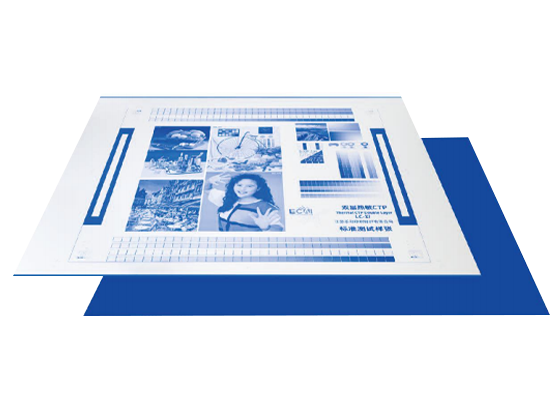
Thermal CTP plates are offset printing plates that carry a heat-sensitive coating on an aluminum base. A thermal platesetter uses an 830 nm infrared laser to heat the coating above a precise threshold, creating a latent image before the plate is developed. After imaging, the plate normally passes through a preheat unit, then a developer that removes the non-image coating and leaves a clean, hydrophilic aluminum surface.
That threshold behavior is what separates thermal from violet plates. Because the coating reacts to temperature rather than to total exposure energy, small variations in laser power have less impact on the final dot. For printers running older platesetters or dealing with inconsistent room temperature, this wider exposure latitude means fewer visible artifacts and a more predictable plate.
Run length and reliability are the two reasons most printers stay with thermal. A quality thermal plate commonly holds 100,000 impressions or more without baking, and double-layer versions push comfortably beyond that. On a well-maintained platesetter, a 200-lpi screen with a 1–99% dot range is a repeatable benchmark rather than a best-case test. When you are printing packaging with large solids and fine reverse text on the same plate, that latitude is the difference between a smooth pass and a stop-press wash-up.
Thermal plates are also daylight-safe. You can handle them under normal lighting without the yellow safelight required for violet systems. That removes a whole category of handling errors in a busy prepress department and simplifies shift scheduling.
Cost models often look different from what newcomers expect. The plate itself is usually more expensive per square meter than a violet plate, but the longer run length, lower remake rate and better ink-water balance on press make the cost per printed sheet lower in most commercial and packaging environments.
Coating structure is where most purchasing mistakes happen. If your order mix is mostly short-run commercial work, a single-layer construction is usually the right base; if long-run packaging or label jobs dominate your pressroom, the double-layer design usually pays for itself.
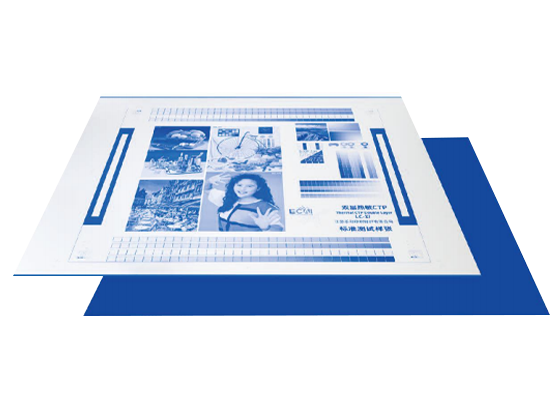
A single-layer thermal CTP plate has one functional coating that handles both imaging and press performance. It offers high sensitivity, a wide exposure latitude and straightforward processing. For commercial work, the single-layer thermal CTP plates from the Lecai range deliver exactly this balance, and they image cleanly on most 830 nm platesetters.
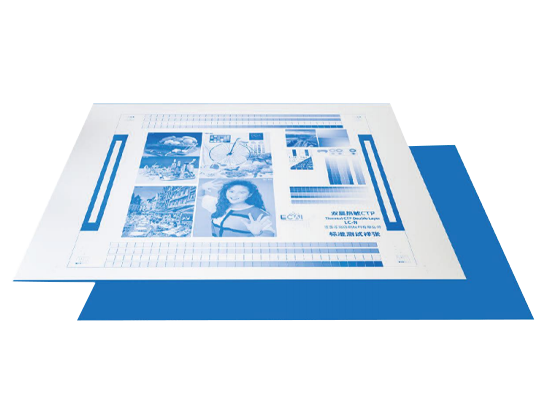 Wholesale Thermal CTP Single Layer Plates Manufacturers, SuppliersYuanrui And Lecai Are China Wholesale OEM/ODM Thermal CTP Single Layer Plates Manufacturers And Custom Thermal CTP Single Layer Plates Su...View Product →
Double-layer plates add a second functional layer that improves scratch resistance, protects the imaged areas and extends run length. They cost more per square meter, but they reduce plate remakes on demanding jobs.
| Criteria | Single-layer plate | Double-layer plate |
|---|---|---|
| Coating structure | One functional coating layer | Extra protective or functional layer |
| Imaging characteristics | High sensitivity, wide exposure latitude | Slightly higher energy requirement, excellent edge sharpness |
| Run length | Reliable for standard commercial runs | Designed for longer runs and repeated handling |
| Typical applications | Brochures, books, business stationery | Packaging, labels, high-volume publications |
| Cost profile | Lower plate cost per square meter | Higher plate cost, lower cost per impression on long runs |
A typical commercial printer will find that single-layer plates cover most daily work: brochures, books, corporate stationery and short-run packaging. For carton printing, labels and high-volume publication work, the calculation changes once orders consistently pass the 100,000–150,000 impressions mark. In that range, the double-layer thermal CTP plate adds the protective margin that keeps plates running long after a single-layer plate would need replacement.
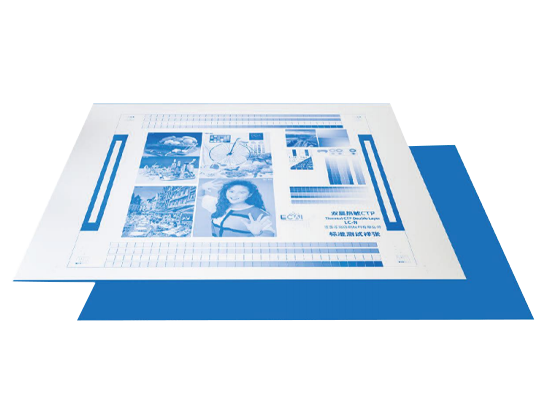
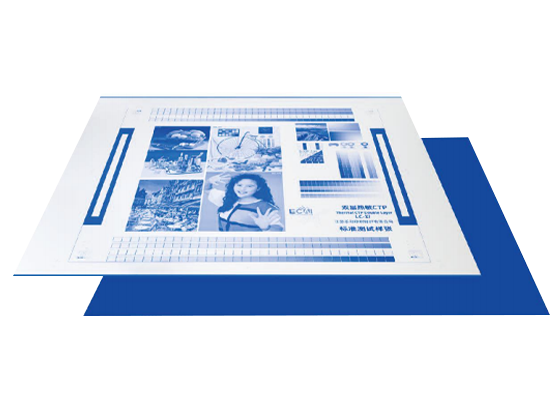 Wholesale Thermal CTP Double Layer Plates Manufacturers, SuppliersYuanrui And Lecai Are China Wholesale OEM/ODM Thermal CTP Double Layer Plates Manufacturers And Custom UV Ink Thermal CTP Double Layer Pl...View Product →
Processless thermal CTP plates remove the developing step from the workflow. The Lecai group developed its own processless version in 2015, and the product now sits alongside conventional plates in the portfolio. On press, the non-image coating is released during the first few rotations, so there is no separate developer and no waste-water stream from that part of the process.
For printers facing tighter environmental compliance or high labor costs, the benefits go beyond chemistry. You free up floor space, remove a maintenance task, and shorten the time between imaging and plating. Make-ready gets simpler because there is no developer strength to check, no conductivity measurement and no replenisher schedule to monitor.
There is a trade-off. Processless plates are more sensitive to press-side conditions: fountain solution settings, alcohol levels and water quality all play a larger role than they do with a conventional developed plate. If you have not standardized your press chemistry, a conventional plate with a matched developer is still the safer default. If your pressroom is disciplined and your environmental targets are aggressive, processless is worth running as a controlled trial.
A good plate does not work alone. The developer and replenisher are part of the imaging system, and their consistency decides whether the plate performs in production the way it did in the lab. If developer activity drifts, or replenisher is added on a fixed schedule instead of by throughput, you will see it first in the midscreen and shadow dots.
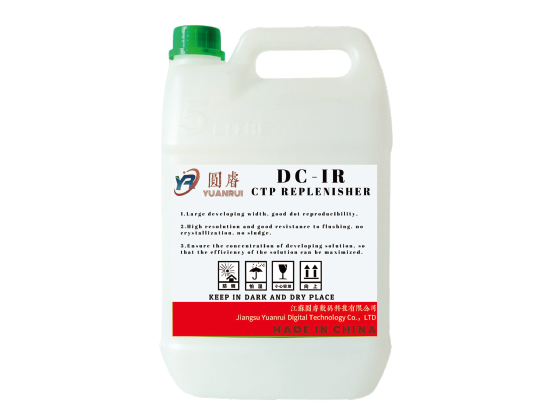
That is why manufacturers recommend staying within one chemistry system. Use the CTP developer that matches the plate's coating chemistry, and keep the replenisher from the same system. The replenisher compensates for the components consumed during processing. Its addition rate should follow the square meters of plate processed, not the calendar. Measure conductivity regularly, track it against plate output, and adjust before the dots move, not after.
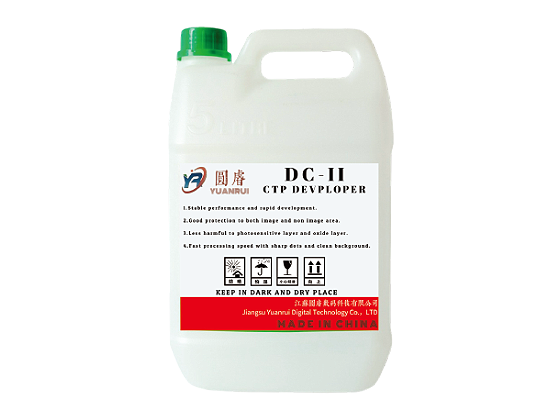 Wholesale CTP Thermal Plate Developer Manufacturers, SuppliersYuanrui And Lecai Are China Wholesale OEM/ODM CTP Thermal Plate Developer Manufacturers And Custom CTP Thermal Plate Developer Suppliers,...View Product →
If you buy plates from one manufacturer and chemistry from another, you lose the traceability that makes troubleshooting possible. When something goes wrong, one supplier cannot take full responsibility. Keeping plate, developer and replenisher aligned gives you a single point of accountability.
Choosing a thermal CTP plate is not just a product decision; it is a supply decision. The best test of a supplier is not the first sample, but the tenth delivery.
A practical way to start is to review the production setup described on the About page. It shows how the Lecai group built its plate-manufacturing base over more than a decade and what infrastructure sits behind the brand. Then ask for a trial under your own press conditions, including your platesetter, your chemistry and your water. Compare the first ten runs, not just the first plate.
The practical conclusion is short. Standardize the process, not just the plate. Use single-layer thermal CTP plates for commercial variety, double-layer plates for long-run packaging, processless plates when your pressroom and environmental targets can handle them, and keep the chemistry inside the same system. Decide on run-length data, trial under your own conditions and check that the supplier can deliver consistently at scale. If you want to move faster, contact the Lecai team early so the trial conditions match your real production.
RELATED PRODUCTS
CONTACT US
KEEP IN TOUCH

Mobile QR code
Contact Information
No.77,Taisheng Road,Hailing District,Taizhou City,Jiangsu
+86 13961040488+86 19852223565
+86 523 86969522
Copyright © by Jiangsu Lecai Printing Materials Co., Ltd. Rights Reserved.Custom Digital Offset Printing Plates Manufacturers

 English
 Français
 Español
 Indonesia
 عربى
عربى