2026-08-05
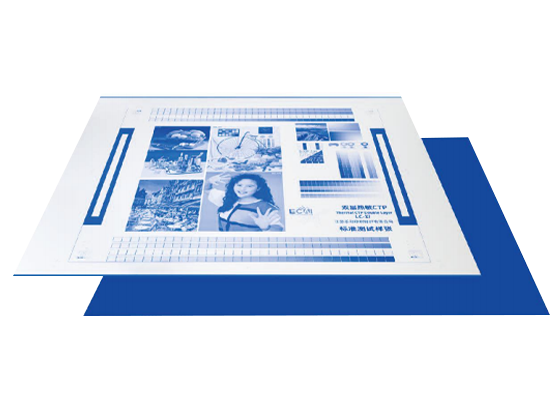
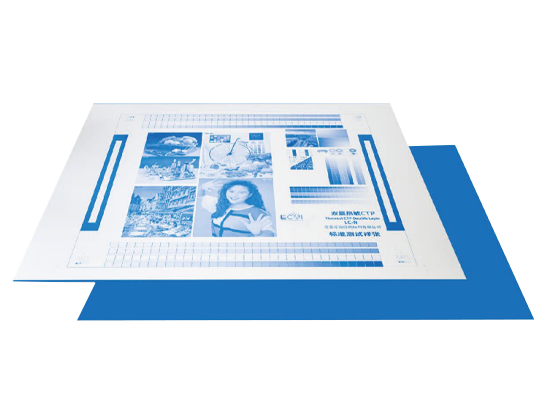
The optimal CTP plate for your pressroom is the one that balances high sensitivity, durable run length, and consistent dot reproduction — while matching your specific press chemistry and ink-water balance. Modern thermal and violet plates offer distinct advantages; thermal plates excel in daylight handling and run lengths exceeding 500,000 impressions, while violet plates deliver superior speed for smaller formats. The decisive factor is not the plate type alone, but how it integrates with your plate processor, press conditions, and substrate portfolio.
Beyond the marketing jargon, CTP plate performance is measurable through four critical dimensions. These metrics directly impact your pressroom efficiency, waste reduction, and final print fidelity.
In practical terms, a plate that excels in all four areas reduces makeready time by up to 18% and saves ~12% in plate-related consumables over a year, according to pressroom data from mid-size commercial printers.
Many printers ask which CTP plate technology is “better”. The reality is more nuanced. Thermal plates (830 nm) and violet plates (405 nm) each shine in different operational contexts.
For a commercial printer running 70% of jobs with quantities between 10,000–50,000, a violet plate system may offer better ROI due to lower equipment cost and faster exposure. Conversely, if your portfolio includes packaging or high-end art reproduction, thermal plates provide the dot fidelity that reduces color variation across shifts.
Beyond print quality, CTP plates contribute significantly to reducing the environmental footprint of printing. Compared to conventional film-based platemaking, CTP eliminates film processing, reducing chemical waste by up to 85% and water consumption by 70%.
For a mid-size pressroom processing 200 plates per day, switching to a processless CTP plate can save approximately 3,200 liters of water and 280 kg of chemical concentrate annually — while also cutting plate processing time by 40%.
Choosing the right CTP plate is not about picking the “best” spec sheet, but about aligning plate characteristics with your unique production environment. Follow this practical framework:
Applying this framework typically reduces plate-related press stops by 22% and improves colour consistency (ΔE < 1.5) according to a survey of 14 European print shops.
Not necessarily. High sensitivity plates (e.g., < 50 mJ/cm²) are more prone to fogging and require stricter environmental control. For most shops, a plate with 90–120 mJ/cm² offers a sweet spot of speed and stability.
While the upfront cost per plate is often 10–15% higher, thermal plates’ longer run length and lower remake rate often result in a lower cost per impression — especially for runs above 50,000.
Mixing plate brands without recalibrating the CTP device and press is risky. Each plate has distinct spectral response and development kinetics. Always run a full fingerprint test when switching.
Practical takeaway: Dedicate 2–3 days for plate validation (including press trials) before committing to a new plate supplier. This small investment pays back in reduced waste and consistent quality over the next 12–18 months.
The next generation of CTP plates is moving toward processless chemistry and embedded quality sensors. Early adopters report that processless plates (both thermal and violet) reduce plate-making time by 50% and eliminate processor maintenance almost entirely.
Additionally, some plates now integrate micro-coded markings that allow press-side scanners to read plate ID, exposure date, and dot curve, enabling automated press presets. This reduces makeready time by an additional 8–12 minutes per job — a significant gain in high-mix environments.
Final takeaway: The right CTP plate is the one that matches your press chemistry, run length, and quality expectations. Prioritise dot stability and chemical robustness over peak sensitivity. Run a structured test (as outlined in Section 4) and measure real press performance — not just plate specs. This approach consistently delivers higher print consistency and lower total cost of ownership.
CONTACT US
KEEP IN TOUCH

Mobile QR code
Contact Information
No.77,Taisheng Road,Hailing District,Taizhou City,Jiangsu
+86 13961040488+86 19852223565
+86 523 86969522
Copyright © by Jiangsu Lecai Printing Materials Co., Ltd. Rights Reserved.Custom Digital Offset Printing Plates Manufacturers

 English
 Français
 Español
 Indonesia
 عربى
عربى