2026-08-19
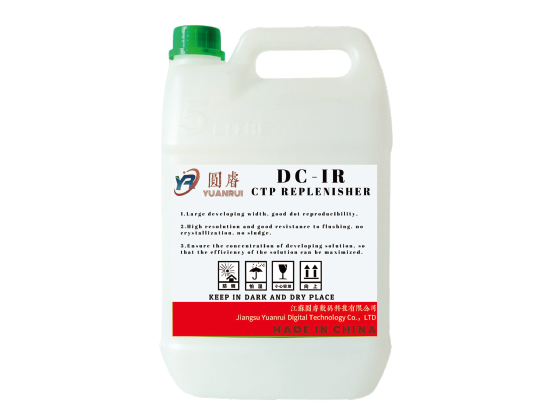
In the complex ecosystem of computer-to-plate (CTP) printing, the replenisher acts as the primary stabilizing agent for the entire imaging process. Its fundamental purpose is not merely to add fluid but to maintain the precise chemical equilibrium required for consistent plate development. Without a properly functioning replenishment system, the developer solution would rapidly degrade, leading to unpredictable plate quality, increased waste, and significant operational costs. The replenisher ensures that the active ingredients consumed during the development of the aluminum or photopolymer layers are systematically replaced, effectively extending the life of the chemistry and guaranteeing that every plate emerges with the exact specifications required for high-fidelity printing.
To understand the necessity of a replenisher, one must first grasp the dynamics of the development bath. As a CTP plate passes through the processor, the developer solution dissolves the non-image areas of the coating. This chemical reaction consumes the active alkalis and additives in the solution. As these components are depleted, the solution's ability to develop plates effectively diminishes. Furthermore, the development process generates byproducts that can contaminate the bath.
The replenisher counteracts these effects through a carefully formulated chemical balance:
This dynamic process is often described as a balancing act, where the replenisher rate is adjusted to match the consumption rate of the chemistry, ensuring a steady state of readiness.
The correlation between replenisher management and final print output is absolute. Inconsistent replenishment leads directly to inconsistent plate making, which manifests on the press as color variation, dot gain, or tonal shift. A well-managed replenisher system provides several distinct quality advantages:
Data from print quality control logs often shows a direct link between the age of the replenisher batch and the variability in delta-E values. Maintaining a strict replenishment schedule reduces this variability by a significant margin, ensuring that the first plate of the day matches the last plate of the week.
Determining the correct replenisher setting is not a static process; it requires adjustment based on several operational variables. Simply setting the machine and forgetting it is a common cause of processing failure. Operators must consider the following factors to optimize the system:
| Variable Factor | Impact on Replenisher Demand |
|---|---|
| Daily Plate Throughput | Higher volume directly increases chemical consumption; linear adjustment required. |
| Idle Time Duration | Oxidation occurs even without plates; requires "idle" replenishment settings. |
| Plate Type Variations | Photopolymer vs. thermal plates require different chemical energies. |
| Ambient Conditions | Heat and humidity accelerate evaporation and chemical breakdown. |
By monitoring these variables, print shops can move from a reactive maintenance model to a proactive one. For instance, during periods of low activity, the replenisher rate should not be set to zero; a minimal "idle" flow is necessary to prevent the solution from spoiling, which would otherwise necessitate a complete dump and refill of the tank.
Even with automated processors, human oversight and mechanical failures can lead to significant issues. Identifying these pitfalls early can save thousands in wasted materials and press downtime. The most frequent errors involve timing and measurement.
One major issue is the reliance on visual inspection alone. The clarity of the developer solution is not always an accurate indicator of its chemical strength. A solution might look clear but be completely exhausted, or look discolored yet still be chemically active. This is why electrical conductivity and pH testing are indispensable tools for the modern prepress technician. Without these measurements, operators are essentially guessing the state of their chemistry.
Another critical error involves the mixing ratio. Many modern systems use concentrates that must be diluted with water. If the water-to-replenisher ratio is incorrect—often due to a faulty mixer valve—the resulting chemistry will be either too weak to develop plates or too strong, causing the emulsion to peel off the plate in undesirable areas.
The financial argument for optimized replenisher usage is compelling. Chemicals represent a significant consumable cost, but the hidden costs of bad plates are far higher. A single ruined plate requires a remake, doubling the material cost and labor, and potentially delaying the entire production schedule. Furthermore, there are environmental considerations regarding the disposal of used chemistry.
Proper management of the replenisher system leads to measurable economic benefits:
Implementing a rigorous maintenance schedule is the only way to ensure the replenisher system functions as designed. This goes beyond simply pouring liquid into a tank. It involves a holistic approach to processor care.
Daily checks should include verifying the level of the replenisher bottle and inspecting the feed lines for air bubbles, which can cause inconsistent dosing. Weekly maintenance should involve a manual check of the replenisher pump calibration. Over time, pump tubes can stretch or wear, delivering less fluid than the digital display indicates. Running a simple calibration test—measuring the output of the pump over a timed interval—ensures accuracy.
Safety is also paramount. CTP replenishers are highly alkaline and can cause severe skin burns. Proper personal protective equipment (PPE), including chemical-resistant gloves and eye protection, must be worn during any handling or maintenance procedure. Furthermore, the storage area for replenisher bottles should be kept away from direct sunlight and extreme temperatures to prevent premature degradation of the chemical components.
RELATED PRODUCTS
CONTACT US
KEEP IN TOUCH

Mobile QR code
Contact Information
No.77,Taisheng Road,Hailing District,Taizhou City,Jiangsu
+86 13961040488+86 19852223565
+86 523 86969522
Copyright © by Jiangsu Lecai Printing Materials Co., Ltd. Rights Reserved.Custom Digital Offset Printing Plates Manufacturers

 English
 Français
 Español
 Indonesia
 عربى
عربى