2026-01-01
In the modern printing industry, high efficiency, stability, and fine printing quality are always the core goals pursued by enterprises. As a crucial basic material in printing production, PS Plate plays a central role in the printing process due to its unique chemical and physical properties.
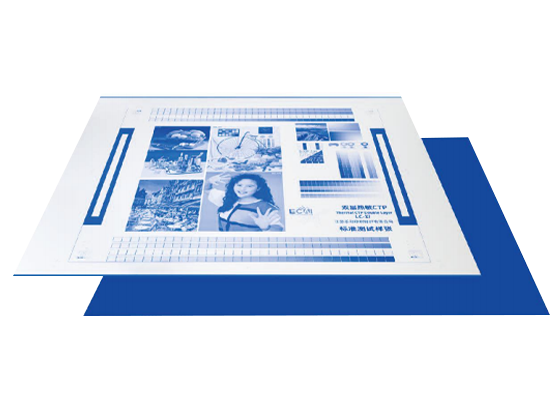
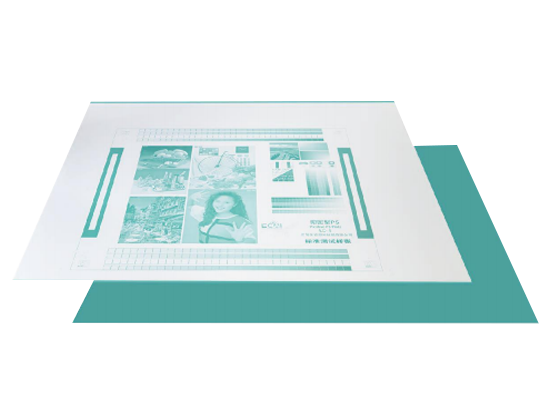
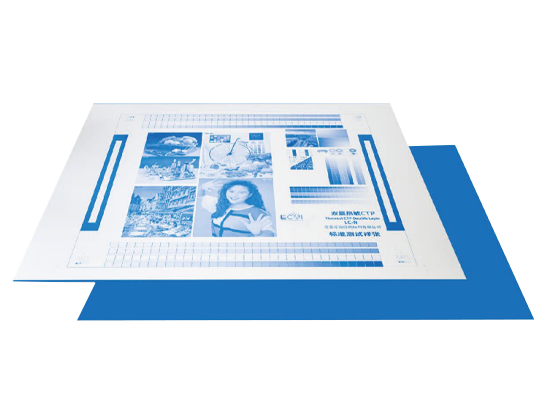
PS Plate, short for Photopolymer Plate, is a printing plate made of a photopolymer as the core material, formed through photochemical reactions. Its basic structure consists of three parts: the base layer, the photosensitive layer, and the protective layer. The base layer usually uses high-strength plastic or polyester film to ensure dimensional stability and wear resistance of the printing plate during the printing process. The photosensitive layer is the core of the PS Plate, containing high-efficiency photosensitizers and uniformly distributed polymer molecules. It undergoes a polymerization reaction through excitation by ultraviolet or visible light, thus forming raised or recessed image areas that can be directly used for printing. The protective layer prevents scratches and contamination during transportation and handling, while maintaining the activity of the photosensitive layer.
From a chemical perspective, PS Plate possesses high photosensitivity and thermal stability. During exposure, the photopolymer can accurately respond to specific wavelengths of light, achieving high-resolution separation of image and non-image areas. At the same time, this material has good resistance to the chemical components of conventional printing inks, maintaining image clarity and printing consistency.
The key to producing high-quality PS Plates lies in the uniform coating of the photosensitive layer and precise exposure control. The manufacturing process usually includes several steps: plate making, exposure, development, and post-processing. First, the polymer photosensitive layer is uniformly coated on the base layer to ensure consistent thickness. Subsequently, ultraviolet light exposure causes the photosensitive layer in the image area to undergo a polymerization reaction, forming a hardened structure that can withstand printing pressure. During development, the unexposed parts are dissolved by the developer, forming the final printed image structure. Finally, post-processing steps such as washing or drying improve the stability and durability of the printing plate.
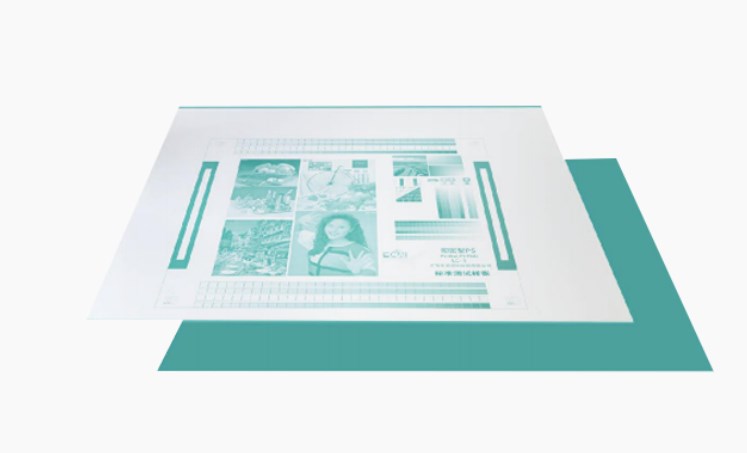
The PS Plate manufacturing process has strict requirements for light source wavelength, exposure time, and temperature and humidity conditions. Any slight deviation may affect the imaging accuracy and printing effect of the printing plate. Therefore, the technical level of the operators and the precision of the equipment are important factors in ensuring printing quality during production and use.
PS plates are widely used in offset printing, flexographic printing, and special printing fields. In offset printing, they provide high-resolution image reproduction, achieving delicate gradients and sharp lines. In flexographic printing, PS plates, with their flexibility and pressure resistance, adapt to the printing needs of different substrates, such as paper, plastic films, and metal foils. Furthermore, PS plates demonstrate irreplaceable advantages in labels, packaging, advertising, and high-precision industrial printing. Their stability and repeatable printing capabilities save companies significant costs and improve production efficiency.
The core advantages of choosing PS plates lie in their high resolution, high durability, and environmental friendliness. First, high resolution ensures accuracy in detail and color reproduction of printed materials, making brand images more vivid and professional. Second, PS plates have a long service life and wear resistance, maintaining image stability even during continuous printing, reducing the cost of re-plating and waste. In addition, compared to traditional metal plates or other chemical plate-making processes, PS plates use environmentally friendly photosensitive materials, free of heavy metals and harmful solvents, meeting the modern printing industry's requirements for green production.
From a business value perspective, PS plates not only improve printing efficiency but also reduce production risks. While ensuring quality, companies can quickly respond to market demands, achieve large-scale customized production, and enhance market competitiveness.
To fully utilize the performance of PS plates, correct selection and maintenance are crucial. When selecting, the plate thickness, photosensitive layer hardness, and surface treatment method should be determined based on the type of printing press, printing materials, and printing cycle. During use, avoid excessive friction and high-temperature environments, ensuring that the printing plates are dry and clean during storage and transportation. In addition, regular light cleaning and protection can extend the service life of PS plates and ensure consistent printing results every time.
As printing technology continues to advance, PS plates still have significant room for innovation in material improvement, surface treatment, and durability enhancement. New photosensitive polymer materials and precision coating technologies are gradually being applied, resulting in higher resolution and greater printing stability. Furthermore, with increasingly stringent environmental regulations, low-solvent, low-pollution PS plates will become the mainstream choice, providing the industry with greener and safer production solutions.
PS Plates are suitable for offset printing, flexographic printing, and various types of high-precision special printing, and can be used with a variety of substrates such as paper, plastic, and metal.
Under correct operation and maintenance conditions, PS Plates have a long service life and can support continuous large-volume printing without affecting image quality.
PS Plates use photosensitive polymer materials, are free of heavy metals and harmful solvents, and meet the green and environmentally friendly requirements of the modern printing industry.
By controlling the thickness of the photosensitive layer, precise exposure and development processes, and proper storage and maintenance, printing accuracy and image stability can be ensured.
CONTACT US
KEEP IN TOUCH

Mobile QR code
Contact Information
No.77,Taisheng Road,Hailing District,Taizhou City,Jiangsu
+86 13961040488+86 19852223565
+86 523 86969522
Copyright © by Jiangsu Lecai Printing Materials Co., Ltd. Rights Reserved.Custom Digital Offset Printing Plates Manufacturers

 English
 Français
 Español
 Indonesia
 عربى
عربى