2026-03-22
The choice between CTP plates and PS plates is one of the most consequential technology decisions a print shop makes. Both are aluminum-based offset printing plates that carry the image to be printed, both are processed with developer chemistry, and both are mounted on a press to transfer ink to the substrate. But the workflows that produce them, the equipment they require, and the quality outcomes they deliver are fundamentally different — and the economics of the two systems favor different operational scales and production volumes. Understanding the real differences, rather than relying on the marketing language that surrounds both technologies, is the basis for making this decision correctly.
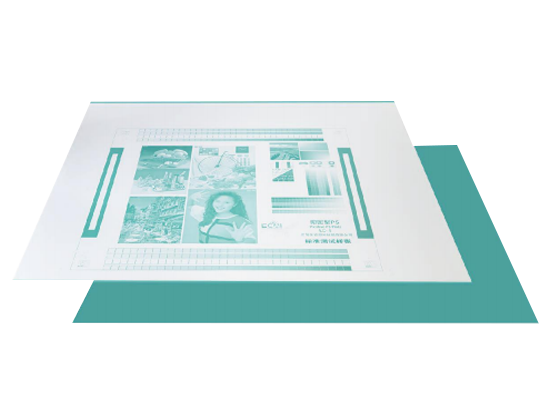
PS stands for Pre-Sensitized — the plate is coated with a photosensitive layer (typically a diazonium compound or photopolymer in positive or negative working formulations) that reacts to UV light exposure. PS plate platemaking is a two-step process: film output followed by contact exposure.
In the first step, the digital file is output to film on an imagesetter — the image is written onto photographic film using a laser, and the film is developed to produce a positive or negative film. This film is the intermediate step between the digital file and the printing plate. In the second step, the PS plate is placed in a plate-burning unit with the film positive laid in direct contact with the plate's emulsion surface. UV light is shone through the film onto the plate — in a positive-working plate, the UV light exposes the areas through the clear parts of the film, making those areas soluble in developer; in a negative-working plate, the UV light hardens the areas through the transparent parts, making those areas resist the developer. After exposure, the plate is run through a processor with developer chemistry to wash away the soluble areas, leaving the printing image on the plate surface.
The PS plate process requires film output equipment (imagesetter), a UV plate burner or exposure unit, and a plate processor with developer. The film itself is a consumable cost per job, and the film output step adds time between digital file approval and plate ready for press.
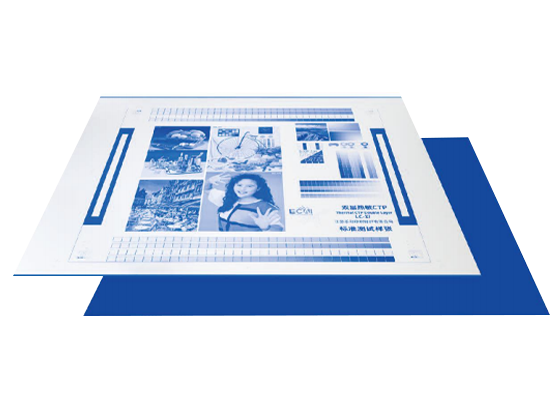
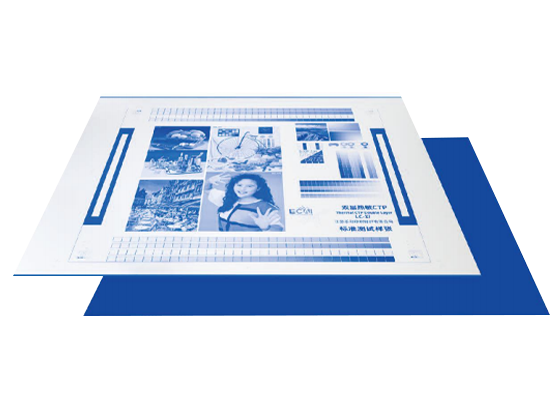
CTP stands for Computer-to-Plate. The digital file is written directly onto the plate by a laser in a CTP platesetter — there is no film intermediate. The platesetter's laser exposes the plate's photosensitive coating in the exact pattern of the image, transferring the digital file directly to the plate surface in a single step. The exposed plate then goes through the developer processor in the same way as a PS plate, producing the finished printing plate ready for press mounting.
The elimination of the film step is CTP's primary process advantage: it removes a source of dimensional variation (film can stretch or shrink slightly with temperature and humidity, introducing registration errors between colors), eliminates the film consumable cost, eliminates the time required for film output and handling, and reduces the physical storage and handling of film. The image quality is determined entirely by the platesetter's resolution and the plate's imaging chemistry, without the potential for dot gain or loss that can occur in the film-to-plate contact exposure step.
CTP platesetters write images at resolutions up to 2,400–3,600 dpi (dots per inch), producing sharper dot edges than contact-frame PS plate exposure can achieve. This sharper dot resolution is the primary image quality advantage of CTP over PS.
| Factor | CTP Plate | PS Plate |
|---|---|---|
| Platemaking steps | Digital file → Platesetter → Developer → Press | Digital file → Imagesetter → Film → Plate burner → Developer → Press |
| Film required | No — direct digital-to-plate | Yes — film positive is an intermediate step |
| Image resolution and dot quality | Higher — laser direct write at 1,200–3,600 dpi; sharper dots | Lower contact exposure through film limits the achievable dot sharpness |
| Color registration accuracy | Higher — no film dimensional variation between colors | Lower — film stretch/shrink can cause color misregister |
| Platemaking speed | Faster — no film output step; plate ready in minutes | Slower — film output and handling add time per job |
| Equipment investment | High — platesetter requires significant capital investment | Lower — UV burner and film processor is less expensive than a platesetter |
| Consumable cost per plate | Plate cost + developer (no film cost) | Plate cost + film cost + developer cost (higher total consumable cost) |
| Suitable for short runs | Excellent — fast job changeover; no film waste for short runs | Less efficient — film cost and time make short runs proportionally expensive |
| Print run length | Long run capability; thermal CTP plates support 100,000+ impressions | Good — standard PS plates support 50,000–100,000 impressions |
| Process-less variant available | Yes — process-free thermal CTP eliminates developer chemistry entirely | No development chemistry is required |
Despite CTP's advantages in image quality, speed, and elimination of film costs, PS plates remain in active use in certain operational contexts. The capital cost barrier is the primary reason — a platesetter costs significantly more than the UV exposure equipment needed for PS platemaking. For small print shops with lower production volumes where the capital investment cannot be justified by the throughput, PS plate technology with a modest imagesetter and exposure unit provides a lower entry cost to commercial offset printing.
PS plates are also used in markets and regions where film-based proofing and approval workflows remain the standard, where digital proofing has not yet fully replaced analog film-based contract proofing. In these environments, the film that is produced for PS plate exposure is also used for the proofing step, so the film cost is partially amortized across both functions.
For very simple jobs — single-color printing of forms, tickets, or simple documents — the quality advantage of CTP over PS may not be perceptible in the finished print, making the lower cost of PS plate production attractive for these commodity print segments.
Within the CTP category, process-less (or processless) thermal CTP plates represent a further step beyond conventional CTP: the exposed plate goes directly to press without passing through any developer chemistry. The image forms through a thermal mechanism that makes the exposed areas directly functional as printing areas without chemical development. The unexposed coating is washed off by the fountain solution during the first impressions on press.
Process-less CTP eliminates the developer processor from the platemaking workflow — no chemistry to mix, monitor, replenish, or dispose of, no processor to maintain, no chemical effluent to treat or discharge. For print shops in regions with strict environmental discharge regulations, or for operations where chemistry management is a significant operational burden, process-less plates offer both environmental and operational simplification beyond conventional CTP. Print quality and plate life are comparable to conventional thermal CTP plates for the applications that process-less plates are designed to serve.
No — CTP plates mount on the same press cylinders as PS plates. Both plate types use the same aluminum base and the same standard plate dimensions for the press model. The switch from PS to CTP changes only the platemaking equipment upstream of the press (replacing the film imagesetter and UV burner with a platesetter), not the press itself. Plates from both systems are functionally interchangeable on press. The plate's coating chemistry is different, but the press's inking, dampening, and impression systems handle both plate types identically. The only press-side consideration is confirming that the developer used for the CTP plate type is compatible with the press chemistry (fountain solution chemistry, ink type) — this is a standard compatibility check when introducing a new plate chemistry to an existing press configuration.
The quality difference is most visible in fine halftone work, small text, and high-screen-ruling (fine dot pattern) printing. CTP's sharper dot edges produce cleaner highlight dots that don't fill in or disappear, more accurate shadow reproduction, and crisper small text at point sizes below 6–8 points. In coarser, simpler printing work — forms, tickets, basic commercial printing at screen rulings below 100 lines per inch — the difference between CTP and PS is often not perceptible in the finished print, which is why PS plates remain viable for commodity print segments. The quality advantage of CTP is most significant in the premium commercial printing segments — high-quality catalogs, packaging with fine halftone photography, security printing, and any job where color accuracy and dot fidelity are selling points.
Both CTP thermal plates and PS plates have defined shelf lives that should be respected for consistent platemaking quality. Most CTP thermal plates have a shelf life of 12–24 months from manufacture when stored in the original sealed packaging at recommended temperature and humidity (typically 15–25°C, below 60% relative humidity, away from direct light and chemical fumes). PS plates have similar shelf life requirements. Both plate types degrade in quality — developing inconsistent sensitivity or background toning — if stored beyond their shelf life or in adverse conditions. For operations with predictable, high plate throughput, shelf life is rarely an issue. For lower-volume operations with longer inventory cycles, confirming the manufacturing date on incoming plate orders and implementing first-in-first-out stock rotation is the appropriate quality practice.
Thermal CTP Plate (Process-less) | Positive PS Plate | Thermal CTP Plate (Double Layer) | CTP Developer | CTP Replenisher | Contact Us
RELATED PRODUCTS
CONTACT US
KEEP IN TOUCH

Mobile QR code
Contact Information
No.77,Taisheng Road,Hailing District,Taizhou City,Jiangsu
+86 13961040488+86 19852223565
+86 523 86969522
Copyright © by Jiangsu Lecai Printing Materials Co., Ltd. Rights Reserved.Custom Digital Offset Printing Plates Manufacturers

 English
 Français
 Español
 Indonesia
 عربى
عربى