2026-11-20
Ask ten prepress managers which CTP plate is best and you will get ten confident answers, and every one of them will be right for the shop it came from. That is the first thing worth understanding about choosing the right CTP plate for offset printing: there is no universal winner. There is only the plate that fits your imaging device, your job mix, your processing setup and the expectations your customers place on the printed sheet. We have spent many years making plates for printers in more than fifty countries, and the conversations that lead to a good decision almost always begin with questions rather than with a product page.
Before anyone opens a plate catalog, open the platesetter specification sheet. Thermal CTP plates are imaged by 830 nm laser diodes, violet-sensitive and CTCP plates respond to a different wavelength, and PS plates are exposed through film with UV light. A plate that is sensitive to the wrong wavelength is not a poor product; it is simply the wrong product for that machine, and no amount of price negotiation will fix it.
Three practical details deserve the same attention. Plate thickness and gauge must match what your drum or external-drum device handles comfortably. Punch registration and plate size need to align with your press format so that clamping stays consistent. And the developer you already run matters, because switching chemistry to suit a new plate can add cost and downtime that were never in the original calculation. If your prepress team is stable and your device is healthy, the sensible move is usually to stay within a plate family your equipment was built for, then optimise within that family.
In practice, most offset printers end up comparing four or five options. The table below is the shorthand we use when a customer asks where to start.
| Plate family | Imaging path | Where it usually fits | Processing |
|---|---|---|---|
| Thermal CTP, single layer | 830 nm thermal laser | General commercial and packaging work, medium to long runs | Conventional developer |
| Thermal CTP, double layer | 830 nm thermal laser | Fine detail, tight dot control, demanding long runs | Conventional developer |
| Positive CTCP | Violet laser on a CtCP unit | Shops adding digital imaging without replacing existing exposure equipment | Conventional developer |
| Positive PS plate | UV contact through film | Analog workflows, small plants, proof and spot work | Conventional developer |
| Processless thermal CTP | 830 nm thermal laser | Shops facing wastewater limits, short to medium runs | On-press or light clean-out |
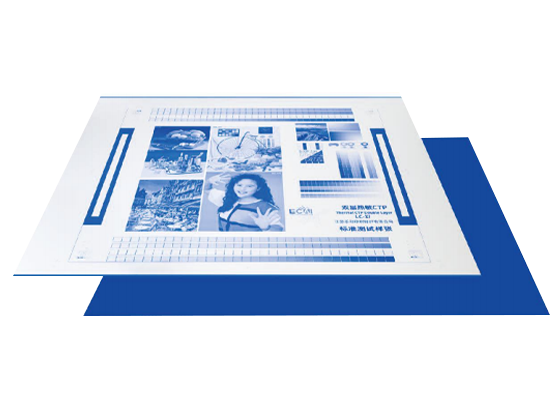
A single-layer thermal plate carries its imaging and ink-receptive behaviour in one coating. It is straightforward to handle, forgiving in the processor and dependable on everyday work. For a shop running a steady mix of commercial jobs with moderate run lengths, it often represents the least complicated path from file to press.
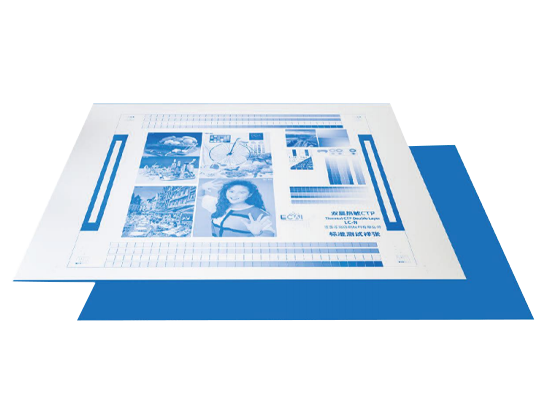 LC-S Single-Layer Thermal CTP PlateA single-layer thermal CTP plate for commercial color and newspaper printing, offering straightforward handling, precise halftone dots and 80,000–100,000 unbaked impressions.View Product →
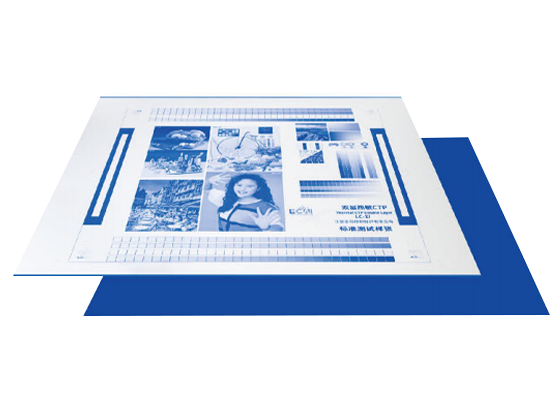
A double-layer plate separates functions across two coatings, one for imaging and one for the substrate and ink interaction. The practical result is wider development latitude, sharper dot edges and better hold on fine highlights and shadow detail, which is why it tends to appear in work where a client will look closely at a 2% tint or a hairline rule. It also tolerates more variation in processor condition and press settings, which matters in shops where several operators share the same line.
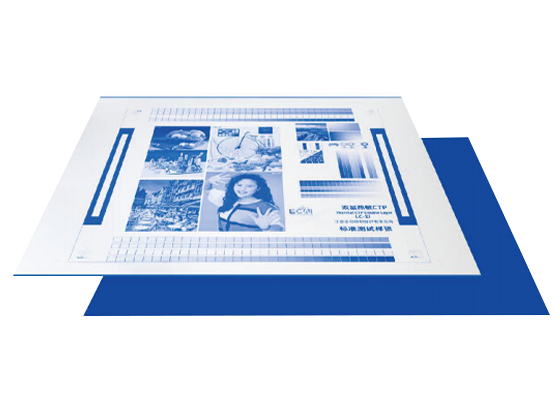 LC-XI Double-Layer Thermal CTP PlateA double-layer thermal CTP plate for high-end commercial and newspaper printing, compatible with UV ink and offering doubled run length with ordinary ink.View Product →
Neither is more advanced in any absolute sense. One buys simplicity, the other buys tolerance and detail. The honest question is which of those your order book actually rewards.
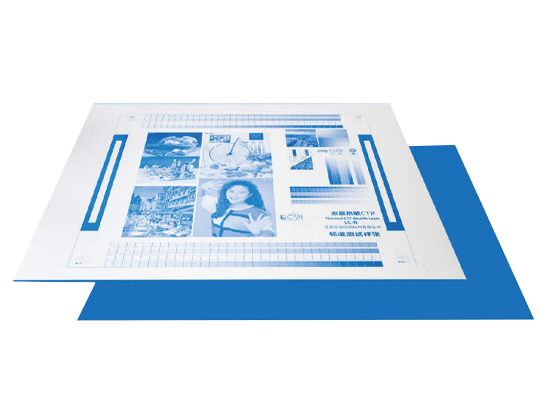
Positive CTCP plates are often described as a bridge between film-based platemaking and full thermal CTP. They are imaged digitally on CtCP equipment but behave in processing much like a conventional positive plate, which makes them attractive to printers who already own that equipment and see no reason to replace it while it still delivers acceptable quality. For packaging, labels and general commercial work where the tonal range is not extreme, the results can be entirely satisfactory, and the investment stays modest.
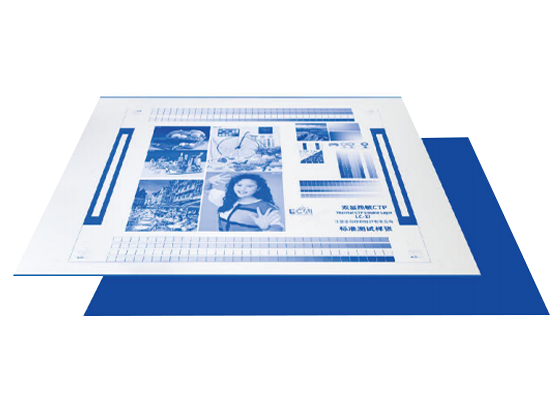 LC-III Positive CTcP Single-Layer PlateA positive CTcP plate that bridges film-based and thermal workflows, offering precise halftone reproduction and development tolerance for commercial and newspaper printing.View Product →
PS plates remain in service for analog workflows, spot colour, proofing and small plants where a film-based process still does everything the customer base asks for. It is worth being clear-eyed here: PS plates are not a stepping stone you must abandon, but they do limit how far you can push resolution and repeatability. If you want a longer comparison of the two routes, our article on the key differences between CTP and PS plates sets them side by side.
Plate and chemistry are one system, not two purchases. Developer strength, replenishment rate, bath temperature and dwell time all influence dot fidelity, and a perfectly good plate can be made to look mediocre by a processor that is running outside its window. Whichever plate you choose, budget for a proper replenisher routine and for the discipline of measuring rather than guessing. It is the cheapest quality upgrade available to most prepress departments.
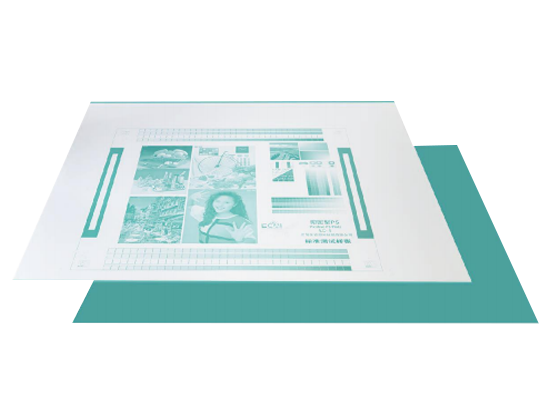
Wastewater is the other half of the conversation, and in many markets it is now the deciding factor. Processless thermal plates remove the developer stage altogether, cutting water use, chemical storage and effluent handling. They are not a free lunch, since handling and storage of unexposed plates need care and imaging energy must be adequate for the job, but for printers under discharge limits or working toward environmental certification they are often the most pragmatic way forward. Our own team has been developing processless technology since 2015, largely because customers kept asking for it rather than because it was fashionable.
Datasheets tend to describe the best case. When you evaluate a plate, test it on your jobs and your press. A short, practical evaluation usually covers four things: whether a 1% to 99% dot range at your normal screen ruling holds up on plate, whether small type and reversed lines survive a full run, how the plate behaves after a few hours of exposure to normal yellow-light conditions, and whether the ink and water balance settles quickly at start-up. Ask what run length is guaranteed rather than quoted, and ask what happens when a batch falls short.
Sample plates cost a fraction of a bad plate decision. Most suppliers, ourselves included, would rather send a trial quantity and hear honest feedback than win an order that quietly fails three months later.
The purchase price of a plate is the easiest number to compare and the least useful on its own. A more reliable measure is cost per acceptable printed sheet, which pulls in chemistry consumption, remakes, plate waste on start-up, operator time and press downtime caused by inconsistent imaging. A cheaper plate that adds two remakes a week is not cheaper.
Run length belongs in that same calculation. If most of your work sits under a few thousand impressions, paying for a plate engineered for extremely long runs rarely pays back. If your jobs are long and your clients demand consistency through the final sheet, a plate with more headroom usually earns its price before lunch. Know your average and your outliers before you compare quotes.
Choosing the right CTP plate is ultimately a matching exercise, not a shopping one. Get the equipment fit right, be honest about your order book, keep your chemistry under control, and the shortlist usually narrows itself to two sensible options. If you would like to know more about how our plates are produced and where they are used, you are welcome to read our company background or simply ask us a direct question. We would rather point you to the plate that suits your shop, even when it is not the one you originally called about.
RELATED PRODUCTS
CONTACT US
KEEP IN TOUCH

Mobile QR code
Contact Information
No.77,Taisheng Road,Hailing District,Taizhou City,Jiangsu
+86 13961040488+86 19852223565
+86 523 86969522
Copyright © by Jiangsu Lecai Printing Materials Co., Ltd. Rights Reserved.Custom Digital Offset Printing Plates Manufacturers

 English
 Français
 Español
 Indonesia
 عربى