2025-11-08
In the modern printing industry chain, PS Plate has always been regarded as a crucial basic material for achieving high-quality print output. With the upgrading of printing technology, changes in market demand, and the accelerated advancement of the digital wave, the performance, processes, and application scenarios of PS Plate are constantly being optimized, gradually forming a more efficient, stable, and environmentally friendly prepress plate making solution. Leveraging its comprehensive advantages in image clarity, stability, and adaptability, PS Plate has accumulated a high degree of application maturity in commercial printing, packaging printing, and publishing. Its technological evolution is continuously driving the entire printing industry towards higher quality and higher efficiency.
PS Plate Structural Characteristics and Imaging Mechanism
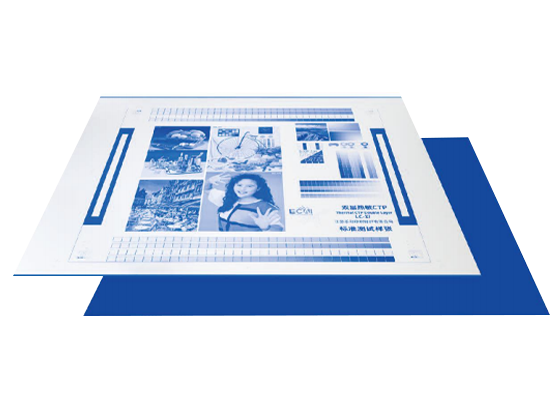
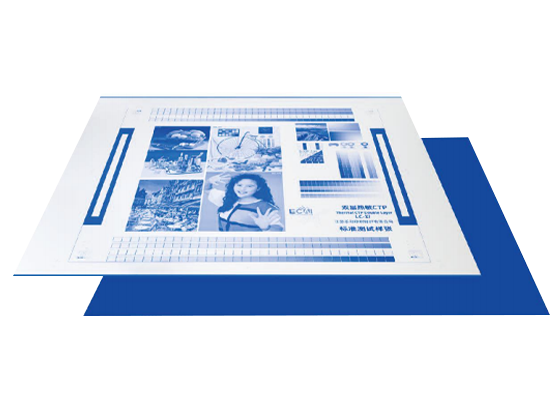
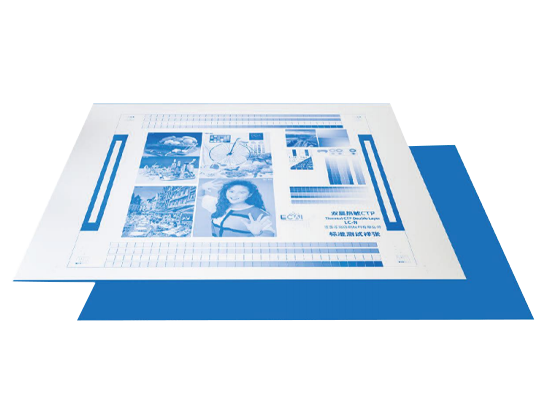
PS Plate is essentially a photosensitive plate material with an aluminum substrate as its core. Through surface treatment, pre-coating of a photosensitive layer, and post-development processes, it achieves clear separation between image and non-image areas. Its delicate photosensitive layer structure can form a stable and uniform latent image during exposure. Subsequent development, washing, and drying steps result in image areas exhibiting excellent oleophilic characteristics, while non-image areas retain significant hydrophilic properties. This contrast between oleophilic and hydrophilic properties gives PS Plates high image resolution and durability during the inking stage, providing a stable and continuous imaging foundation for high-speed printing equipment.
Regarding the physical stability of the aluminum substrate, the anodized and granulated aluminum substrate effectively enhances the plate's strength, ensuring its flatness and wear resistance during long-term printing and preventing image deformation. The precise formulation of the photosensitive layer also determines the PS Plate's exposure efficiency and image quality; its chemical properties and photoreaction speed are crucial criteria for evaluating the core performance of a printing plate.
The Value of PS Plates in Traditional Printing
Despite the rapid development of digital printing, traditional offset printing still dominates the printing industry. PS Plates, as an irreplaceable key medium in offset printing, demonstrate stable advantages in printing efficiency, image consistency, and cost structure. They enable high-resolution image reproduction, maintaining high uniformity even on high-speed printing presses for fine dots, gradations, and complex structures. For printing operations requiring high-volume, continuous output, the durability of PS Plates is particularly important.
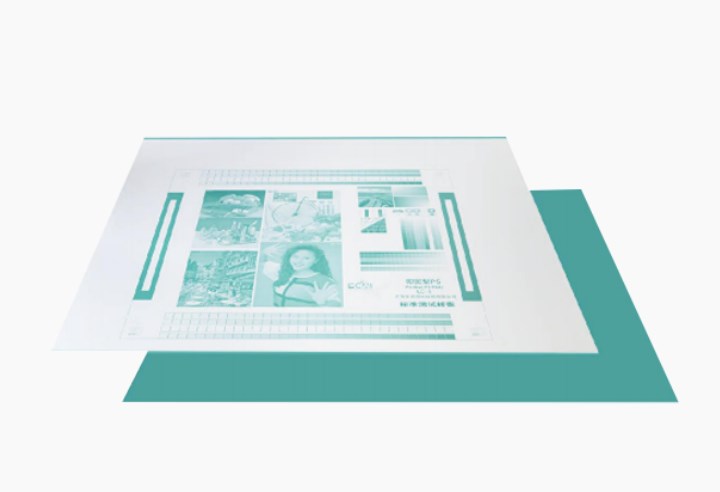
Meanwhile, the adaptability of PS Plates to different ink types, papers, and processing conditions makes them highly versatile in packaging printing, commercial color printing, and book printing. It not only ensures the saturation and stability of printed colors but also reduces the failure rate during printing through excellent ink-water balance, thereby further reducing overall production costs and improving production line efficiency.
From Traditional PS Plates to Process-Free Plates: The Development Trend
With the advancement of green printing policies, traditional PS Plates require wet processing such as developing and washing in the plate-making process. To reduce the use of chemical consumables, the industry has begun to focus on the development of process-free PS Plates. Process-free plates, through special coating formulations, can be directly printed after exposure without a developing system, significantly simplifying the pre-press process.
This technological approach is not only more environmentally friendly but also reduces manual and equipment operation processes, improving plate-making efficiency. Process-free PS Plates continue to improve in terms of clarity, printing durability, and adaptability, gradually becoming an important choice for mid-to-high-end printing companies. As market demands for efficiency and environmental protection increase, the penetration rate of process-free plates will continue to expand.
Factors Affecting PS Plate Quality and Process Optimization Directions
The performance stability of PS plates depends not only on the coating material but also on the uniformity of the aluminum substrate processing, the control of the photosensitive layer thickness, and the surface microstructure. Printing companies often focus on the ink absorption performance, resolution, stain resistance, and abrasion resistance of the plate material when selecting PS plates, as these factors determine the stability of the plate material's performance during high-speed printing.
In terms of process optimization, modern PS plate manufacturers are continuously improving the spectral response quality of photosensitive materials, enabling faster responses under lower energy exposure conditions. Simultaneously, through higher-precision granulation technology, a more regular micro-texture structure is formed on the aluminum substrate surface, improving abrasion resistance while maintaining good hydrophilicity, further enhancing printing durability.
The Continued Value of PS Plates in the Context of Digital Transformation
While digital printing is growing rapidly in the short-run and personalized printing markets, PS plates still possess irreplaceable advantages in medium- and long-run printing scenarios. The digital wave is driving further evolution of PS plate technology, such as more efficient plate-making machines, more intelligent prepress management systems, and more environmentally friendly plate technologies, making the application of PS plates smoother and more efficient.
When printing companies undergo overall digital upgrades, they often still require PS plates as a core productivity foundation, ensuring that PS plates will remain in high demand for a considerable period. Facing industry transformation, PS plate technology has not been marginalized; instead, it has found new vitality driven by the demand for high-quality printing.
The future PS plate market will be influenced by multiple factors, including the demand for high-quality commercial printing, environmental policies, and the evolution of intelligent prepress technologies. Plate manufacturers are pushing overall performance to higher standards by optimizing coating materials, improving photosensitivity, and extending printing life, while simultaneously reducing operating costs. With the global printing industry restructuring, PS plates will continue to be a core consumable in offset printing, maintaining stable market demand and ushering in a more high-end development direction.
RELATED PRODUCTS
CONTACT US
KEEP IN TOUCH

Mobile QR code
Contact Information
No.77,Taisheng Road,Hailing District,Taizhou City,Jiangsu
+86 13961040488+86 19852223565
+86 523 86969522
Copyright © by Jiangsu Lecai Printing Materials Co., Ltd. Rights Reserved.Custom Digital Offset Printing Plates Manufacturers

 English
 Français
 Español
 Indonesia
 عربى
عربى